
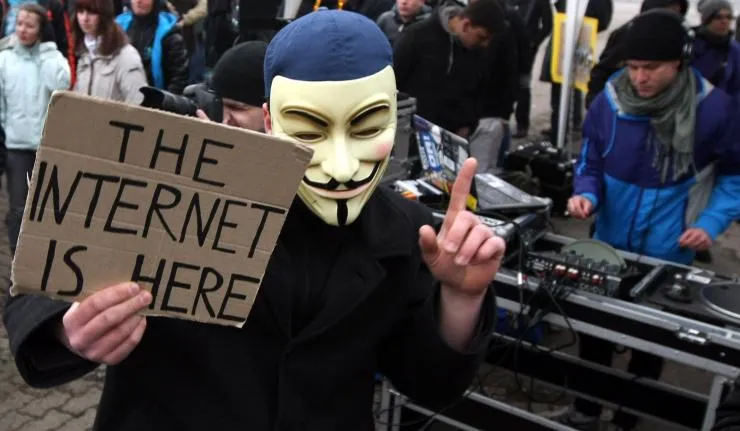
Authoritarian regimes learned to fear the rise of the internet because it spurred an online community who encouraged information sharing relatively free from government oversight. However, the West—the creator of the internet—is retreating from openness in cyberspace because of strong arguments made by defense specialists about cyber vulnerabilities and because of cyber meddling by foreign actors, most clearly the Russian Government. This article argues that combatting the rise of authoritarianism, particularly in Russia, requires embracing the strategic advantages openness provides for democracy…
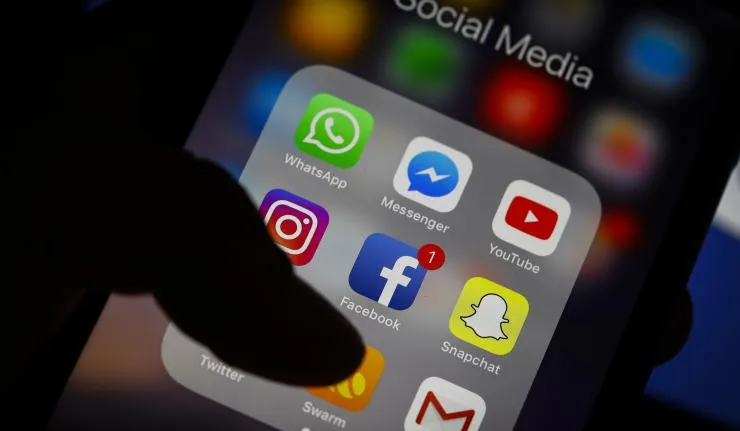
State-sponsored cyber groups have long utilized spear phishing to pierce government networks. Spear phishing relies on social engineering to trick individuals into revealing sensitive information or downloading malicious software, rather than hacking into a system vulnerability by force. While email remains the preferred medium to conduct spear-phishing attacks, social media has opened up new attack vectors for politically motivated cyberattacks. Social media platforms, as high-trust environments typically accessed from a mobile device for personal entertainment or networking, are highly conducive…

In the summer of 2017, Twitter bots—automated accounts—were deployed to boost messaging on both sides of the diplomatic dispute between Saudi Arabia and Qatar. Some appeared commercial, made available by users outside the Gulf region to anyone willing to pay for them. Others appeared locally focused. Together, such bot deployments significantly distorted Twitter traffic. The Gulf dispute showcases the range of different bots and their impact.
This paper argues that one of the major purposes of a disinformation campaign is to sustain a discursive conflict between users of social networks. By examining the phenomenon of “unfriending,” the paper describes how disinformation campaigns sabotage horizontal connections between individuals on either side of a conflict and strengthen a state’s capacity to construct an image of an external enemy. The paper argues that horizontal connections are targeted because they have the potential to mitigate social cleavages, challenging state control over the legitimacy of a conflict narrative. Understanding…
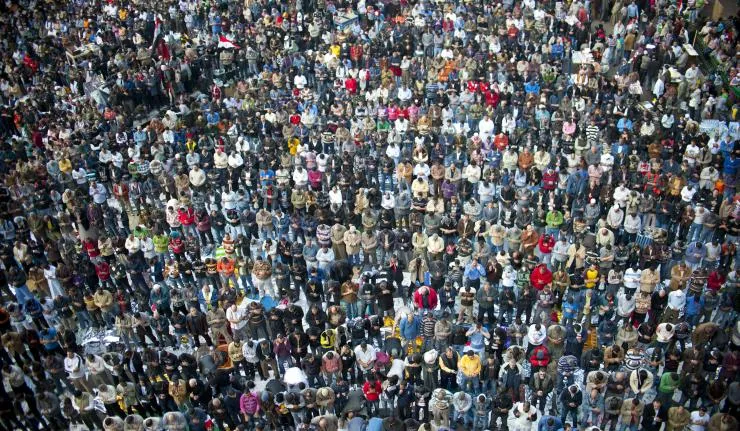
Ongoing research and discussions examine the role of technology—information communication technologies in particular—in conflict, principally focusing on whether technology is a good or bad thing for peace and social progress. This narrow focus overlooks important considerations about how technology interacts with human nature and surrounding contextual dynamics, and in so doing obscures opportunities to prevent harm and to leverage technology for good. This article explores interdisciplinary research and lessons from violence-prevention efforts in Kenya to propose a new approach for understanding…


Social media has emerged as a powerful tool for political engagement and expression. However, state actors are increasingly leveraging these platforms to spread computational propaganda and disinformation during critical moments of public life. These actions serve to nudge public opinion, set political or media agendas, censor freedom of speech, or control the flow of information online. Drawing on data collected from the Computational Propaganda Project’s 2017 investigation into the global organization of social-media manipulation, we examine how governments and political parties around the…
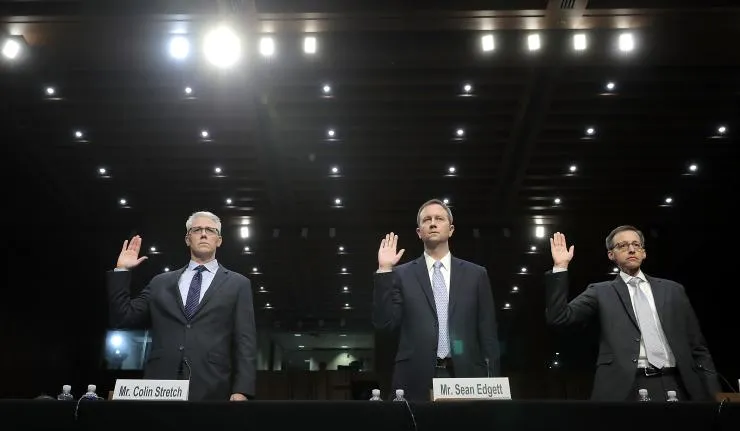
Major social-media companies profess liberal values like global community and democratic participation as primary incentives motivating the design of their platforms and their proposed solutions to online disinformation. However, the industry of digital marketing that underlies these companies’ business models is in tension with these values. Digital marketing ascribes more value to users from demographics with higher socioeconomic status, and online disinformation campaigns that harness the infrastructure of digital advertising built into social media undermine democratic participation. Regulators…
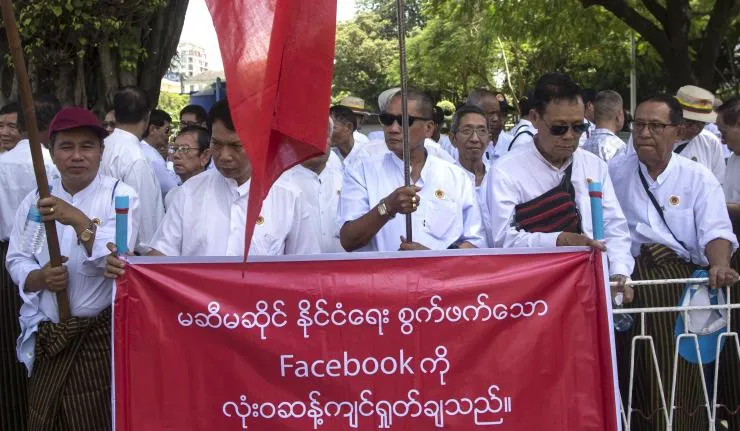
This article addresses ethical dilemmas concerning freedom of expression and Facebook in a context of religious tension and semi-democratic rule in Myanmar. It begins with a discussion of how Buddhist ultranationalists have used Facebook to stoke fear, normalize hateful views, and facilitate acts of violence against the Rohingya and other Muslim communities in Myanmar. It then analyzes the Myanmar Government’s use of Facebook in ways that have reinforced, rather than challenged, anti-Muslim rhetoric while restricting independent reporting. It concludes with a consideration of what Facebook and…
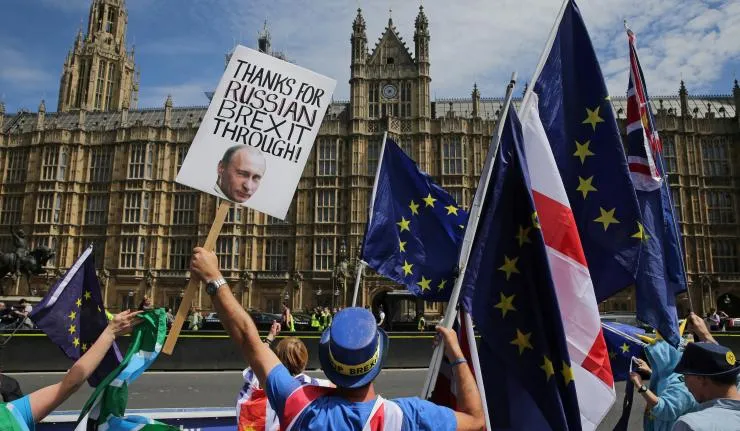
The field of conspiracy theories has previously focused primarily on the role of conspiracy theories in U.S. politics, neglecting the use of conspiracy theories as strategic narratives more broadly. A subset of question-raising conspiracy theories codes was developed for this study to include a more nuanced look at conspiracy theories and the techniques used to undermine existing narratives. Question-raising theories do not use the words “conspiracy” or “theory.” This study analyzed daily RT RSS feeds from June-July 2016 using the application of codes pertaining to Brexit, the EU, EU member…
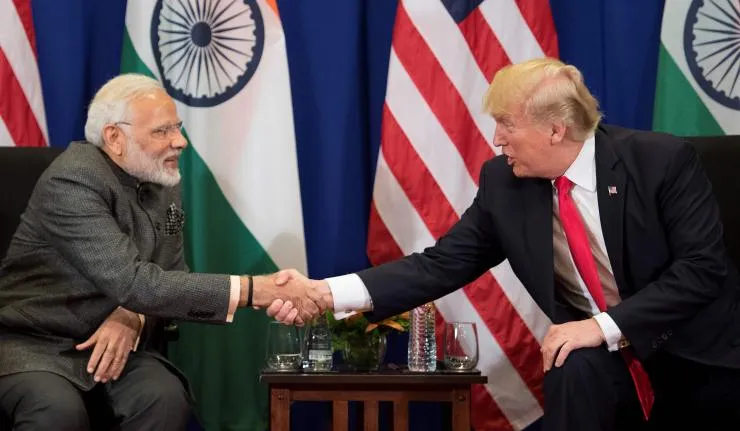
On 6 September 2018, U.S. Secretary of State Mike Pompeo and Secretary of Defense James Mattis will meet their Indian counterparts in New Delhi. The inaugral 2+2 Dialogue is an opportunity for both sides to discuss strengthening their strategic, security, and defense co-operation in the Indo-Pacific and beyond. Aayush Mohanty argues that top of the list should be the impact of U.S. sanctions on India’s defense and energy needs.

China has developed an arsenal of counterspace weapons, which is likely to be a threat to Indian assets in space in the event of confrontration on Earth. Rahul Krishna and Radhika Chhabra propose a model for Indian deterrence in space based on the theory of deterrence through denial. The model is based on mitigating the strategic gains for China and increasing the cost of an attack on India’s space assets, thus greatly increasing the threshold for such an attack to occur.