

Brexit has far-reaching implications, affecting not only Britain's economic, social, and diplomatic relations, but its security and defense capacity as well. Yicheng Zhang argues that despite the UK's recent steps toward increasing military commitments in the east of Suez, a "global Britain" strategy may be untenable in the long-run.
At the Journal of International Affairs launch event for our issue The Fourth Industrial Revolution, we had the opportunity to speak with our five guests about their perspectives on the future of work. You can find out more about the issue and read select articles here.


In December 2018, the Journal of International Affairs interviewed Izumi Nakamitsu, United Nations Under-Secretary-General and High Representative for Disarmament Affairs, on the implications of the Fourth Industrial Revolution for global peace and security. Ms. Nakamitsu assumed her current position in May 2017. Prior to this post, she served as Assistant Administrator of the Crisis Response Unit at the United Nations Development Programme since 2014.
Ms. Nakamitsu has many years of experience within and outside the United Nations system, most recently as Special Adviser Ad Interim on Follow-up…

Mozambique’s two civil conflicts are both results of the country’s defining challenge: managing its transition into becoming a fossil fuel economy.


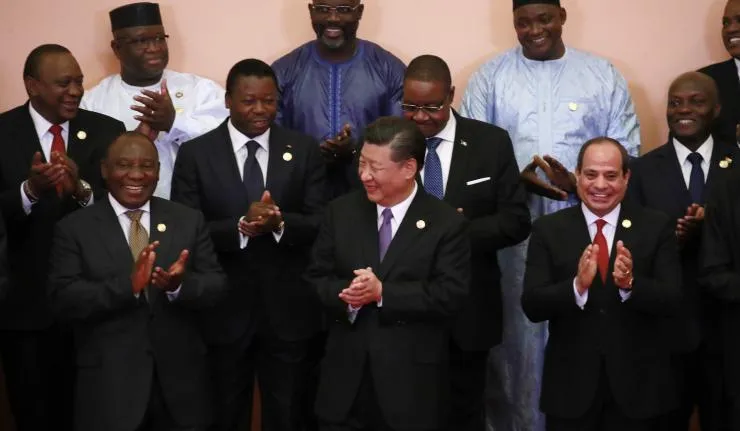
Bhaso Ndzendze discusses the scarcity of simplistic hypothesis testing and model-building in studying the relations between China and African states and the unsubstantiated generalisation which stems from this.



Predicting the gender effects of the next phase of technological change is complex. Potential mass job displacement, as predicted by some of the most quoted analysts, could be expected to put gender equality gains at risk, with women again encouraged to focus more on unpaid work, as happened after the two world wars when mass unemployment was threatened. Predictions of job loss by gender are based on extrapolating from the current pattern of gender segregation. This may be a reasonable method to predict job loss, provided attention is paid to the fact that not all women’s jobs are routinized…