
Why Middle Power Influence Depends on Indigenous Authority
From Chile’s lithium flats to Indonesia’s nickel-rich islands, the race among emerging middle powers to secure critical minerals for strategic autonomy from China and the United States is generating new global coalitions—but most of those minerals lie beneath Indigenous territory. Until foreign policy frameworks acknowledge Indigenous nations as rights-holders rather than stakeholders to be managed, the new global order will be built on outdated policies it claims to replace.
Critical Minerals and Traditional Territories Will Shape the Next Global Order
Speaking at the World Economic Forum in Davos, Canadian Prime Minister Mark Carney declared a fundamental shift in the international order, warning that middle power countries not “at the table,” risk becoming “on the menu"—a pointed articulation of the emerging imperative for assertive middle power autonomy from the superpower influence of China and the United States.[1] The sentiment found reinforcement at the February 2026 Munich Security Conference, where Finnish President Alexander Stubb argued that middle powers previously constrained to align with either Beijing or Washington will now shape the next world order through demographics, economic strength, and natural resources, provided they engage through what he called a “dignified foreign policy.”[2]
Yet for all the sophistication of this emerging framework, both leaders and the broader community of foreign policy analysts have left a foundational variable largely unexamined: the geopolitical architecture underpinning middle power competition is built, quite literally, upon the traditional territories of Indigenous peoples. The critical minerals conferring strategic leverage to these rising states—indispensable to advance defense systems, renewable energy infrastructure, and consumer electronics—are predominantly located beneath Indigenous lands.
Some policymakers will resist this framing, contending that resource governance is a matter of national sovereignty, that existing consultation mechanisms are adequate, or that deeper Indigenous engagement delays extraction timelines essential to meet global demand. These objections merit serious engagement. However, bypassing or marginalizing Indigenous rights generates precisely the outcomes such policymakers see to avoid—social conflict, costly legal challenges, and reputational damage to both governments and corporate partners.
The question confronting middle powers, therefore, is not whether they will rise (the trajectory is clear) but whether their ascent will be built on genuine partnership with Indigenous nations or by perpetuating extractive paradigms characteristic of the colonial era.
The New Terrain of Middle Power Competition
This cooperation among middle powers signifies more than diplomatic realignment; it represents a fundamental reconfiguration of economic power. For example, the Digital Economy Partnership Agreement (DEPA), established in 2020 by Singapore, Chile, and New Zealand, has expanded to include South Korea and has attracted applications from nine economies including Canada and Ukraine.[3] Additionally, Bolivia is adopting a state-led approach reflecting broader regional efforts to independently shape critical mineral investment designed to reduce dependence on China and the United States.[4]
The vast source of critical minerals underpins a country's capacity to maintain technological superiority, provides political influence, and protects strategic interests in an increasingly competitive global environment. Key nations poised to drive this geopolitical shift based on access to natural resources include Indonesia, which controls 25 percent of global nickel reserves; Chile, possessing nearly 30 percent of the world's lithium; Vietnam, with an estimated 5.4 billion tons of bauxite ore deposits containing significant gallium quantities; and the Democratic Republic of the Congo, home to the planet's largest cobalt deposits.[5]
Indigenous Territories as Resource Heartlands
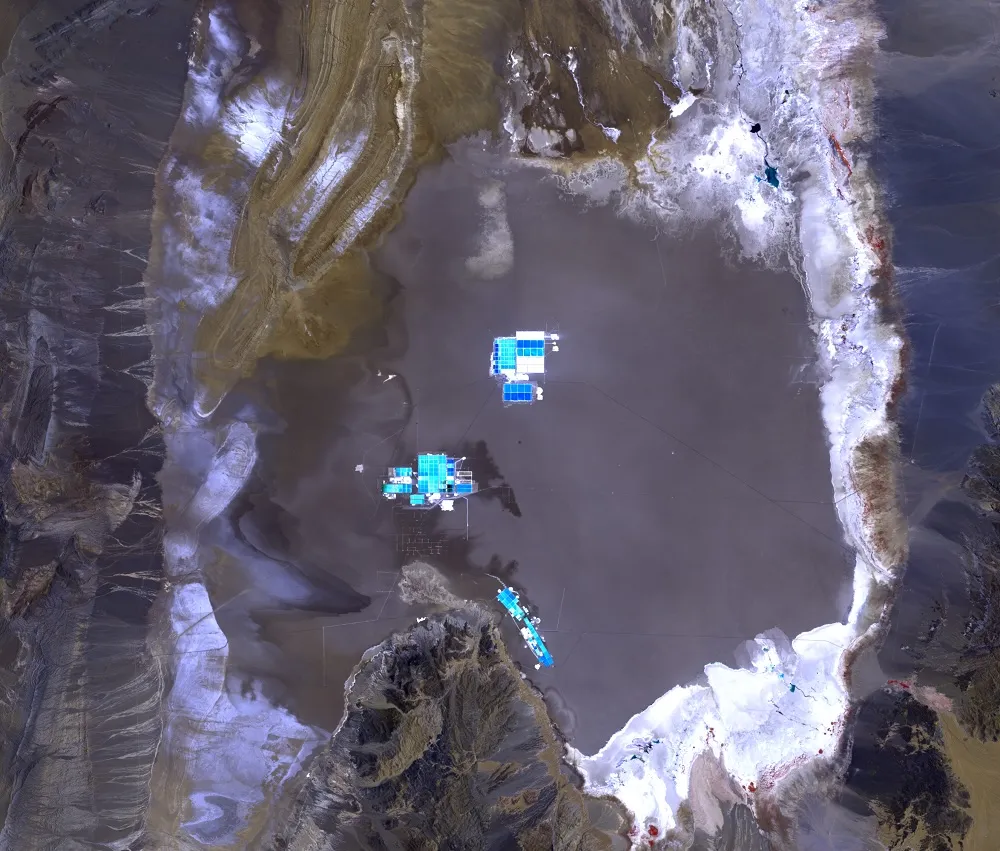
In Chile, lithium deposits in the Atacama Desert fortify the nation's strategic autonomy ambitions. Indigenous Atacameño, Colla, and Diaguita peoples constitute significant populations in mining regions where communities have faced reduced water supplies and ecosystem degradation.[6] The Chilean government's 2022 national lithium strategy mandates Indigenous consultation; however, its implementation remains contested. According to the International Development Research Centre, Argentina, Bolivia, and Chile make up the so-called Lithium Triangle, which contains more than 200 Indigenous communities whose ancestral territories overlap with over half of the world's known lithium resources.
Indonesia presents a more pronounced example. Over 90 percent of the nation's nickel reserves—critical for electric vehicle batteries—are concentrated in provinces such as Sulawesi and Maluku, inhabited for millennia by Indigenous Kaili, Minahasa, and Toraja peoples. Indigenous populations number approximately 50 to 70 million individuals, representing roughly 25 to 30 percent of Indonesia's total population.[7] However, government reluctance to conduct comprehensive demographic surveys renders precise figures uncertain. This demographic ambiguity has tangible consequences: without clear accounting of Indigenous populations, enforcement of the U.N. framework requiring Indigenous consent for projects affecting traditional lands becomes inconsistent, permitting mining operations to proceed with only minimal input from affected communities.
The Democratic Republic of the Congo, which holds 70 percent of global cobalt reserves, presents further complexity.[8] Members of the Mbuti, Baka, and Batwa peoples inhabit lands affected by industrial and artisanal mining operations. Terminology distinguishing groups as ethnic or Indigenous with ancestral land ties remains contested within the African context. Regardless of terminology, traditional communities and customary land tenure systems govern extensive territories containing cobalt deposits. An estimated 40 to 60 percent of Congolese territory falls under customary tenure; however, these communities have historically been excluded from mining negotiations.[9]
In Brazil, Indigenous peoples represent 0.8 percent of the national population but control 13 percent of the country's territory, including areas rich in rare earth elements including niobium, a steel-strengthening component.[10] Efforts by the previous Bolsonaro administration to open Indigenous lands to mining provoked international condemnation. While the Lula administration has reversed this policy, pressure from mining interests remains intense. Brazil's emergence as a middle power anchor in Latin America will largely depend on how it addresses this tension.
Why Indigenous Participation Is Not Optional
Foreign policy analysts, narrowly focused on state actors and corporate interests, often mischaracterize Indigenous peoples as mere stakeholders to be managed. Indigenous peoples are rights-holders with legal standing under international and domestic law, political actors capable of halting projects, and knowledge-keepers whose understanding of local ecosystems can determine project viability.
The principle of enforceable Indigenous rights has been affirmed in landmark judicial decisions. Canada's Supreme Court, in the 2014 Tsilhqot'in Nation v. British Columbia ruling, confirmed that Indigenous nations holding Aboriginal title have the right to control land use and may refuse development projects unless the government can demonstrably justify infringement under stringent conditions.[11] This jurisprudence underscores that Indigenous opposition carries substantial and enforceable legal weight.
Practical implications are evident across middle power jurisdictions. In Chile, members of the Indigenous Coyo community and Atacameño Association successfully petitioned the court in July 2025 to halt the multibillion-dollar lithium Codelco-SQM deal when the Chilean government attempted to bypass previously agreed-upon consultation processes and environmental impact assessments.[12] In Indonesia, Indigenous legal resistance has challenged the expansion of nickel mining. Furthermore, in Greenland, the Inuit government halted Chinese investment and operations at the Kvanefjeld rare-earth mine due to health and environmental concerns.[13]
Proceeding without Indigenous consent entails escalating long-term risks. Social conflict disrupts operations, generating instability that undermines reliable resource extraction. Environmental damage provokes international pressure, threatening market access. Legal challenges delay projects for years. Furthermore, investors and consumers increasingly demand evidence of Indigenous consent as a prerequisite for capital investment.
To proactively mitigate these risks, policymakers should implement early engagement protocols that ensure Indigenous participation from pre-project inception. Establishing joint planning committees, co-developed frameworks, and clear consultation timelines can address concerns. Transparent benefit-sharing frameworks, such as revenue sharing or equity participation, can align incentives and foster enduring partnerships.
Benefit-sharing agreements should extend beyond employment quotas to include equity stakes, and revenue sharing linked to commodity prices. Practical models exist; for example, Canada's 2022 Coastal GasLink pipeline agreement granted First Nations a 10 percent equity stake and proportional revenue sharing, establishing a replicable model.[14] The project enabled Indigenous nations to actively monitor and report on construction activities and use revenue to support community-led initiatives, such as language and cultural programs.
From Principle to Practice: Operationalizing FPIC
The international community has established a framework for Indigenous participation known as Free, Prior and Informed Consent (FPIC). Enshrined in the 2007 UN Declaration on the Rights of Indigenous Peoples and adopted by 15 to 20 middle power countries, FPIC affirms Indigenous peoples' right to grant or withhold consent for mining, logging, and infrastructure projects affecting their lands, territories, and resources.[15]
A significant gap persists between principle and practice. Governments and corporations often treat FPIC as a procedural formality rather than genuine consent. Consent implies veto power. This distinction is substantive, determining whether Indigenous peoples act as partners shaping development or merely as populations informed of predetermined decisions.
Despite its promise, operationalizing FPIC often encounters recurring obstacles. Political resistance remains a significant barrier, as governments may view FPIC requirements as constraints on national sovereignty or economic growth. In some cases, inconsistent recognition of Indigenous communities, governance structures, and ongoing jurisdictional disputes further complicate implementation. Mistrust stemming from historical grievances can undermine the willingness to participate. By anticipating and addressing these obstacles, stakeholders can make FPIC a foundational safeguard rather than a procedural formality.
Reframing Multilateral Architecture
The middle power cooperation framework articulated in Davos and subsequent international policy forums remains constrained by an outdated paradigm. This framework treats subnational populations strictly as internal matters. Such an approach is untenable when resources enabling middle power influence are predominantly located in territories where Indigenous peoples retain de facto or de jure authority.
Decisions regarding resource extraction and environmental management should devolve to Indigenous nations whose territories are directly implicated. Embedding this principle ensures emerging institutions reflect the realities of where power and legitimacy now reside. Ironically, emerging middle power structures such as the Future of Investment and Trade Partnership, the Digital Economy Partnership Agreement, and lithium coordination in Latin America are designed to escape current geopolitical spheres of influence.
However, these middle power structures risk reproducing the fundamental deficiencies of post-World War II multilateral institutions. Created 80 years ago, the United Nations was established without input from colonized peoples.[16] Just as the United Nations faces legitimacy challenges stemming from its founding exclusions, middle power institutions excluding Indigenous peoples will encounter similar challenges.
A more coherent approach would recognize Indigenous nations as participants in middle power negotiations when resource extraction occurs in their territories. This recognition does not imply full state membership but should, at a minimum, include permanent observer status, focused on extractives and environmental protection, alongside formal consent and consultation requirements. A precedent exists in the establishment of the Arctic Council. Established in 1996 based on recognition that circumpolar governance requires Indigenous participation, the Council includes six Indigenous Permanent Participants alongside eight member states.[17] The Council provides Indigenous peoples with a direct voice to amplify policy concerns related to the environment, natural resources, and geopolitical challenges—an unprecedented arrangement in international diplomacy.
The same logic applies to critical mineral extraction in lower latitudes. For example, since Norway includes Indigenous Sami representatives in Arctic governance, Chile's exclusion of Atacameño representatives from lithium governance is inconsistent. As Canada and Denmark recognize Inuit authority in Arctic strategy, Indonesia should include traditional communities in its nickel policy.
The Path Forward
Middle power nations face a critical decision. They can adopt a different global model by acknowledging Indigenous peoples as essential partners, implementing FPIC principles and ensuring equitable sharing of resource revenues, and include Indigenous representatives in new multilateral institutions. This path offers legitimacy, stability, and long-term sustainability.
Middle powers demonstrating ethical resource extraction with Indigenous consent gain competitive advantages in markets increasingly focused on supply chain ethics. They avoid social conflicts affecting extractive projects globally. They utilize Indigenous knowledge systems, enhance environmental sustainability, and build resource sectors resilient to political transitions and commodity fluctuations.
The alternate paths envisioned by Prime Minister Carney and President Stubb cannot be constructed on the erosion of Indigenous authority. Critical minerals that provide middle powers with leverage lie beneath Indigenous territories. The question is not whether to engage Indigenous peoples, but in what capacity—as junior partners grudgingly consulted or as co-architects of a new international order recognizing them as the nations they have always been.
Emerging middle powers can construct influence differently. Whether they seize this opportunity will determine not only their success but also whether middle power cooperation represents genuine innovation in international relations or merely a rearrangement of actors within the same extractive logic that has prevailed for centuries.
Michael A. Orona is a 25-year veteran of the U.S. Department of State where he has held an array of senior foreign policy positions that include Senior Advisor for Global Strategy, serving at the White House as National Security Council Director for Southern African Affairs, and Senior Advisor for International Indigenous Issues where he co-led the White House Committee on International Indigenous Affairs. He is a member of the Chihene Nde Apache Tribe and of Yaqui ancestry. The views expressed are his own and do not reflect U.S. government policy.
[1] Mark Carney, “Special Address by Canadian Prime Minister Mark Carney,” World Economic Forum, Davos, January 20, 2026, https://www.weforum.org/stories/2026/01/davos-2026-special-address-by-mark-carney-prime-minister-of-canada/.
[2] Alexander Stubb, “How to Navigate the Shifting International Order,” Foreign Affairs, February 5, 2026, https://www.foreignaffairs.com/podcasts/how-navigate-shifting-international-order.
[3] Singapore Ministry of Trade and Industry, “Digital Economy Partnership Agreement (DEPA) Factsheet,” August 2026, https://www.mti.gov.sg/trade-international-economic-relations/agreements/digital-economy-agreements-dea/depa/.
[4] SFA Oxford International, “The Energy Transition in Bolivia,” February 2026, https://www.sfa-oxford.com/lithox/critical-minerals-policy-legislation/all-countries/south-america/bolivia/.
[5] United States Geological Survey, Global Maps of Critical Mineral Production in 2023, https://www.usgs.gov/publications/global-maps-critical-mineral-production-2023. Jared Cohen, “The Rise of Geopolitical Swing States,” Goldman Sachs, May 15, 2023, https://www.goldmansachs.com/insights/articles/the-rise-of-geopolitical-swing-states.
[6] Ohio State University Global Water Institute, “Indigenous Communities Face Crisis Amid Lithium Mining Boom,” May 20, 2024, https://globalwater.osu.edu/news/indigenous-communities-face-water-crisis-amid-lithium-mining-boom.
[7] International Work Group for Indigenous Affairs, “Indigenous Peoples of Indonesia,” 2026, https://iwgia.org/en/indonesia.html.
[8] United States Department of Commerce, International Trade Administration, “Democratic Republic of the Congo: Mining and Minerals,” February 20, 2026, https://www.trade.gov/country-commercial-guides/democratic-republic-congo-mining-and-minerals.
[9] Tenure Facility, “They’ve Been Tending to These Lands for Centuries: How Community Forest Concessions Empower DRC Communities,” September 9, 2024, https://thetenurefacility.org/article/theyve-been-tending-to-these-lands-for-centuries-how-community-forest-concessions-empower-drc-communities/. International Work Group for Indigenous Affairs, “Indigenous Peoples in the Democratic Republic of the Congo,” 2026, https://iwgia.org/en/democratic-republic-of-congo.html.
[10] Agência IBGE Notícias, “Indigenous Population in Brazil, 2022 Census: More than Half of the Indigenous Population Lives in Cities,” December 23, 2024, https://agenciadenoticias.ibge.gov.br/en/agencia-news/2184-news-agency/news/42288-censo-2022-mais-da-metade-da-populacao-indigena-vive-nas-cidades-population.
[11] Supreme Court of Canada, Tsilhqot’in Nation v. British Columbia, July 26, 2014, https://decisions.scc-csc.ca/scc-csc/scc-csc/en/. Ravina Bains, “Supreme Court Ruling Will Have National Implications and Will Likely Stunt Development Resource Projects,” Fraser Institute, July 10, 2014, https://www.fraserinstitute.org/studies/real-game-changer-analysis-supreme-court-canada-tsilhqotin-nation-v-british-columbia.
[12] Latin News, “Indigenous Groups in Chile Challenge Codelco-SQM Lithium Deal,” July 16, 2025, https://www.latinnews.com/component/k2/item/106495-in-brief-indigenous-groups-in-chile-challenge-codelco-sqm-lithium-deal.
[13] Meredith Schwartz and Gracelin Baskaran, “Greenland, Rare Earths, and Arctic Security,” Center for Strategic and International Studies, January 8, 2026, https://www.csis.org/analysis/greenland-rare-earths-and-arctic-security.
[14] Reuters, “TC Energy Offers 10 Percent Stake in Coastal GasLink Project to Indigenous Groups,” March 9, 2022, https://www.reuters.com/business/tc-energy-offers-10-stake-coastal-gaslink-project-indigenous-groups-2022-03-09/.
[15] United Nations General Assembly, “General Assembly Adopts Declaration on Rights of Indigenous Peoples: Major Step Forward towards Human Rights for All,” press release GA/10612, September 13, 2007, https://press.un.org/en/2007/ga10612.doc.htm. United Nations High Commissioner for Human Rights, Free, Prior and Informed Consent Factsheet (Geneva: OHCHR, September 2007).
[16] United Nations, “The United Nations and Decolonization: A Historical Overview,” https://www.un.org/dppa/decolonization/en/about.
[17] Arctic Council, “About the Arctic Council: Quick Guide to the Arctic Council,” https://arctic-council.org/about/.