
The World Trade Organization at a Crossroads
In March 2026 trade ministers met for the World Trade Organization’s 14th Ministerial Conference, the organization’s highest decision-making body. The aim was to keep the organization relevant by addressing the institutional paralysis that has plagued it for years and to revive multilateral trade in a deeply fragmented world. Although the conference failed to bridge the divide, member-states also noted the relevance of a robust multilateral trade system.
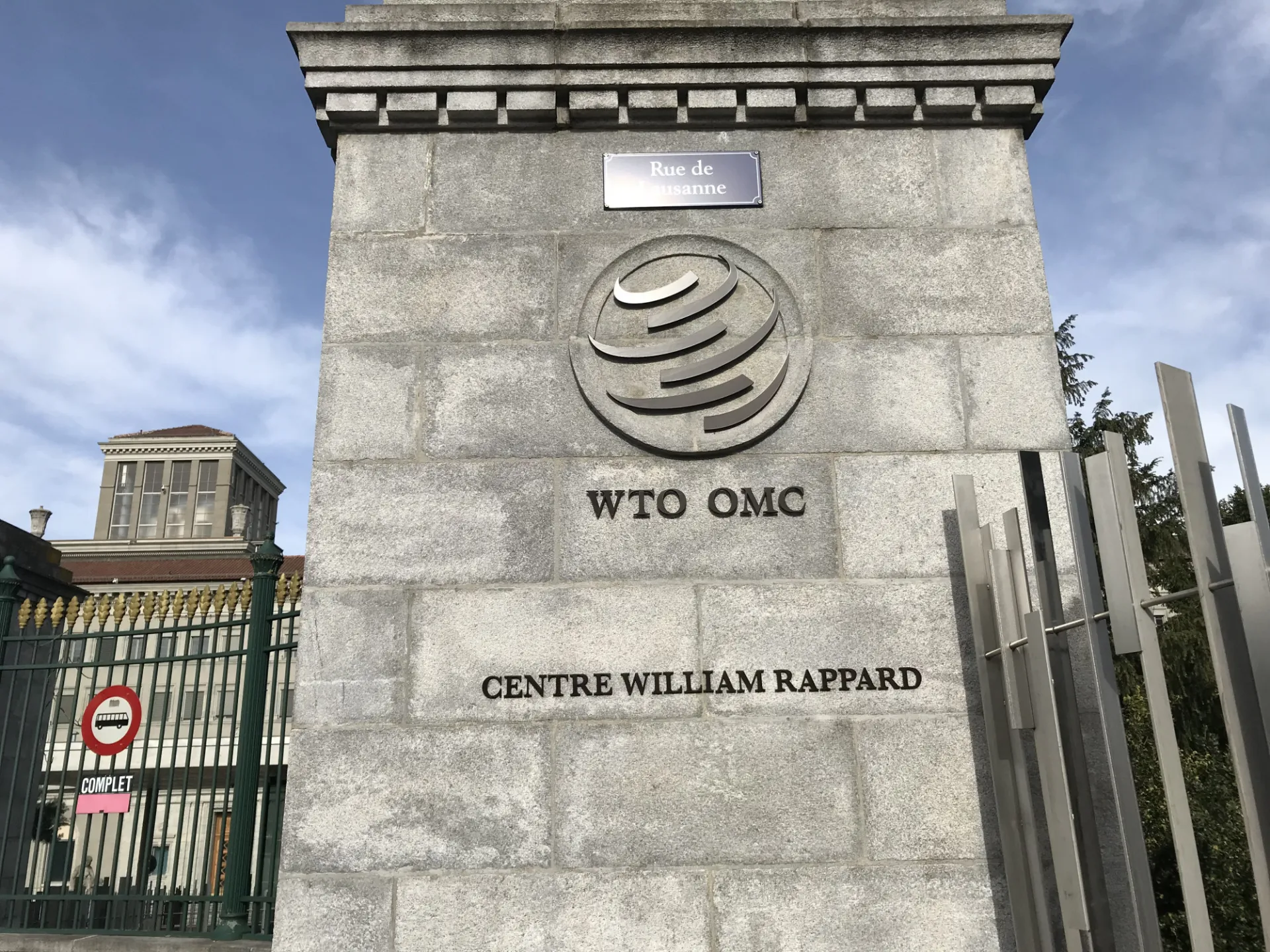
The United States played the key role in liberalizing global trade through the General Agreement on Tariffs and Trade (GATT). In 1994, the US once again took the lead to enable 123 countries to become part of the World Trade Organization (WTO), which not only subsumed the GATT but also expanded its scope to include services trade and intellectual property.[1] The US not only served as the essential mentor in steering the WTO, it also set the example by broadly abiding by the Organization’s rules and regulations. First the GATT and later the WTO promoted global trade by facilitating reciprocal tariff reductions as well as reducing non-tariff barriers.[2] Their success in establishing the institutional foundations for global trade helped usher in some eight decades of sustained economic growth. This underscores the utility of mutually beneficial rules-based trade in generating growth, raising living standards and reducing poverty.[3] The fact that in 2024, the WTO had 166 countries as members accounting for 98% of world trade by value is a testament to the Organization’s usefulness.[4]
However, over the past two decades, US commitment to both multilateral trade and the WTO has been fraying. The growing bipartisan consensus in Congress claims that the global trading system has strayed from its mission and that the WTO has failed in its duties as a neutral arbiter – specifically for US economic interests.[5] Predictably, both Democratic and Republican administrations have played acerbically with the WTO.
Challenges Facing the WTO
Administrations as early as 2008 President Obama have accused the WTO's main enforcement mechanism, the Appellate Body of overstepping its authority in trade rulings.[6] Early in his first term President Trump not only refused to approve new appellate judges to the WTO’s Dispute Settlement Body (DSB), he also blocked all reappointments of those whose terms had expired in 2019.[7] This guaranteed that no effective mechanism existed to adjudicate trade disputes. The Biden administration continued Trump’s policy by blocking appointments to fill essential vacancies, especially to the WTO’s Appellate Body.[8] When President Biden left office, no quorum existed in the WTO’s DSB to adjudicate trade disputes.[9] As WTO rules are legally binding, member states now have little incentive to take matters to the WTO.
The systematic weakening, if not, dismantling of the dispute resolution mechanism of the WTO has been a big setback for international trade. As of 2026, countries negotiating trade deals with the Trump administration have no neutral party to oversee and/or enforce the bilateral and multilateral trade agreements. Rather, countries, in particular, those that Trump considers to ‘have no cards,’ or a weak hand, are at the mercy of the President’s demands and shakedown.[10]
In February 2025, President Trump signed an executive order directing Secretary of State Marco Rubio to evaluate US participation in all international organizations to determine if continued membership and funding aligned with US interests.[11] As expected, the Trump administration suspended US contributions to the WTO one month later.[12] With the imposition of the April 2nd ‘reciprocal tariffs,’ the Trump administration not only chose to side-step the WTO to renegotiate tariffs, it also threatened those who do with retaliation.[13] Instead, US trade partners are expected to ‘buy-down’ the tariffs by purchasing more American-made goods, grant favorable access to US exports and make investment commitments to invest in the United States (e.g., a ‘signing bonus,’ ‘gift’ and ‘seed money’).[14] Last, but not least, the action seen as gravely undermining the WTO came in September 2025 when the Trump administration announced that it was placing its $29 million annual contribution to the Organization ‘on pause’ – an 11% cut from the WTO’s annual operational budget of approximately $232 million in 2024-25 fiscal year.[15]
Remaining Hopeful While Challenges Remain
In an unexpected volte face in late October 2025, the Trump administration discreetly paid its overdue fees to the WTO.[16] This was followed by the appointment of experienced trade lawyer, Joseph Barloon, as Ambassador to the WTO.[17] During his confirmation, Barloon not only ingeminated his belief in rules-based trade, but also in the relevance of the WTO – provided it make tangible reforms in areas that are central to its mission.[18] Given President Trump’s public disdain for the multilateral trading system, much credit goes to the individual(s) responsible for convincing the President of the value of US engagement with international organizations and the benefits of open trade. Certainly, the WTO’s role in facilitating rules-based trade and reducing barriers to promote both American and global prosperity requires reiteration.
Nonetheless, the WTO’s existential crisis is hardly over. The US’ conciliatory gesture can quickly unravel as President Trump is notorious for abruptly about-facing.[19] Indeed, one misstep, purposeful or not, could once again see the world’s largest economy announcing (or concealing) a withdrawal from the WTO. Moreover, all outstanding issues the US has with the WTO linger. As noted, US frustration with the WTO is the culmination of the institution’s inability to reform its rigid administrative and governance structure and, more importantly, how to address the so-called China shock.[20] As WTO Director-General Ngozi Okonjo-Iweala has stated, the Organization is at an inflection point and the status quo is no longer an option.[21]
To exhibit its resolve, the WTO must begin with modest reforms that the US and other members have been calling for. For example, preventing judicial overreach, a perennial concern for nearly 20 years, would require a WTO amendment wherein adjudicators must strictly interpret existing agreements within the parameters of their negotiated mandates.[22] This would reduce the imposition of additional (and often punitive) obligations without the member’s explicit consent, and incentivize the US to reboot the WTO’s dispute-settlement system by making the needed appointments to the WTO’s appellate mechanism.
The Most Favored Key is the Most-Favoured-Nation (MFN)
When Washington imposed its April 2nd Liberation Day reciprocal tariffs, it cited the lack of reciprocity in global trade.[23] Specifically, it claimed that the WTO’s non-discrimination principle is stacked against the US.[24] Before April 2nd, the US had among the lowest simple average MFN tariff rates in the world (3.3%), compared to the European Union’s 5%, China’s 7.5% and India’s 17%.[25] As well, the administration claimed that several large member states maintain high non-tariff barriers.[26] Expressly, China is the leader in manipulating its currency to suppress domestic wages and consumption to negatively impact US exports.[27] China and many others provide subsidies which not only artificially increases the competitiveness of their exports, but also inflates the prices of US imports.[28] In fact, President Trump has long claimed that the lack of reciprocity in global trade is largely at fault for the US accumulating large and persistent annual trade deficits in goods.[29] Rather than invoking the WTO’s national security exception to address the imbalance, he bypassed congressional approval and instead used executive authority under the International Emergency Economic Powers Act to impose the April reciprocal tariffs.[30] In response, China, India, and Brazil, among others, claimed that the US, the EU and other western partners flout the principle of non-discrimination embodied in the MFN through generous subsidies embedded in their expansive industrial policies.[31]
The Trump administration has made its position clear, stating that the MFN principle is unsuitable for this time because China, the world’s second largest economy, has demonstrated an explicit unwillingness to pursue fair market-oriented competition.[32]
Beijing also seems to be in no mood to compromise. Contrary to expectations and despite the Trump tariffs, the Chinese economy has fared well with a GDP growth rate of 5.2% and exports to non-US markets expanding by 14.8% in 2025.[33] Moreover, China’s monopoly on rare earth minerals promises significant leverage.[34] Following the April imposition of reciprocal tariffs, Beijing responded by banning exports of 17 rare earth metals to the US.[35] Such metals are critical to defence, health and high-tech sectors. Only after the Trump administration surrendered via the ‘tariff pause’ did Beijing agree to relax its export restrictions and approve permits for some rare-earth elements and magnets. In fact, Beijing only agreed to fully resume exports of rare-earth minerals in July after the Trump administration lifted the April ban to allow Nvidia to sell its H20 artificial intelligence chips to China.[36]
A Way Forward
Beginning in December 2024, China has applied zero tariffs on all products from states recognized as least developed countries (LDC’s) with which it has diplomatic ties.[37] In June 2025, Beijing announced plans to extend the same zero-tariff protocol to 53 countries in Africa with formal diplomatic relations.[38] On September 25th, 2025, Beijing voluntarily announced that it would no longer claim the WTO’s special and differential treatment.[39] Nevertheless, Beijing’s actions received only lukewarm response from the US, the EU and Japan because it does not include the already existing agreements, but only new ones.[40] Yet, the decision indicates Beijing’s willingness to take responsibility commensurate with its economic size and level of development.
Beijing will certainly have to do more to placate the Trump administration. China’s GDP in 2022 was $18.3 trillion, 73% of the GDP of the US.[41] In 2023, China’s per capita income stood at $13,000.[42] In 2023, China made up about 29% of world’s manufacturing (value added), a sharp jump from 9% in 2004.[43] However, since joining the WTO in 2001 China has continued to define itself as a developing country ostensibly based on its level of income before it joined the WTO.[44] It remains to be seen if Beijing will continue to claim developing country status under the existing WTO agreements. Without this change, Beijing can continue to avoid taking action on the trade distortions inherent in its non-market or state-led economic model, including its regulatory policies on intellectual property and labor protection.
Between March 26th and 29th of this year, trade ministers and senior officials from all member countries met in Cameroon for the WTO’s 14th Ministerial Conference, the Organization’s highest decision-making body. The US along with 66 member states reached a partial agreement on e-commerce, including the implementation of the first set of global rules on digital trade. Members also agreed to continue negotiations on fisheries subsidies and enhance the capacity of developing countries on food safety and product standards. However, the conference failed to reach agreement on a number of pressing matters.[45] For example, matters pertaining to WTO reforms – in particular, how to restore the Appellate Body, the status of developing countries and consensus-based decision-making – were not addressed.
The US Trade Representative termed the 14th Ministerial Conference a failure, questioning the WTO ability to guide global trade policy and warning that the US would be proceeding with trade arrangements with like-minded countries.[46] The US was clearly disappointed in the failure by members to extend the global e-commerce moratorium. This means that digital downloads and streaming services can now be subject to duties. What seems certain is that without substantive reforms, especially on the MFN, the Trump administration will continue to pursue bilateral, and at best plurilateral, but certainly not multilateral trade agreements. John Jackson, one of the chief architects of the WTO, hoped to move the new Organization from a power-based towards more rules-based.[47] Unfortunately, that has not happened, and under the current climate of unilateralism the prospect of meaningful shift towards rules-based trade looks bleak.
Shalendra D. Sharma is the Associate Vice-President and Lee Shau Kee Foundation Chair Professor of Political Science, Lingnan University, Hong Kong (2013-2025). He is the author of the forthcoming book, Trump’s Tariffs and the Global Political Economy by Cambridge University Press.
[1] Wolff, Alan Wm., ed. “WTO 2025: WTO Reform.” In Revitalizing the World Trading System. Cambridge University Press, 2023. https://doi.org/10.1017/9781009289290.021.
[2] Hoekman, Bernard M., and Michel M. Kostecki. The Political Economy of the World Trading System. Third Edition, Third Edition. Oxford University Press, 2010.; Jackson, John H. The World Trading System: Law and Policy of International Economic Relations. 2nd ed. MIT Press, 1997.; Sampson, Gary P. “Challenges Facing the World Trade Organization: An Overview.” Australian Economic Review 51, no. 4 (2018): 453–73. https://doi.org/10.1111/1467-8462.12301.
[3] World Bank. “Trade Has Been a Powerful Driver of Economic Development and Poverty Reduction,” 12 February 2023. https://www.worldbank.org/en/topic/trade/brief/trade-has-been-a-powerful-driver-of-economic-development-and-poverty-reduction.print?cid=SHR_SiteEmailShare_EN_EXT
[4] Organization, World Trade. Annual Report 2024. WTO iLibrary, 2024. https://doi.org/10.30875/9789287076120.
[5] James Bacchus. “What Happens If the United States Leaves the WTO?” Cato Institute, CATO, June 3, 2025. https://www.cato.org/policy-analysis/what-happens-united-states-leaves-wto.
[6] Dani Rodrik, Straight Talk on Trade: Ideas for a Sane World Economy (Princeton University Press, 2017), https://press.princeton.edu/books/hardcover/9780691177847/straight-talk-on-trade.
[7] Robert Lighthizer, No Trade Is Free: Changing Course, Taking on China, and Helping American Workers (New York: Harper Collins, 2023).
[8] Menshikova, A. M. “Position of Joe Biden’s Administration on the World Trade Organization.” Herald of the Russian Academy of Sciences 92, no. Suppl 6 (2022): S529–33. https://doi.org/10.1134/S1019331622120061.
[9] Kenneth Reinert, “Steel, security and the WTO Dispute Settlement Mechanism: A trade catastrophe in the making,” The World Economy, Vol. 47, Issue 6, 2024. https://onlinelibrary.wiley.com/doi/abs/10.1111/twec.13556
[10] Robert Baldwin, “The Great Trade Hack: How Trump's trade war fails and the world moves on,” (London: CEPR Press, 2025). https://cepr.org/publications/books-and-reports/great-trade-hack-how-trumps-trade-war-fails-and-world-moves
[11] White House, “America First Trade Policy,” 90 Fed. Reg. 8471, January 20, 2025. https://www.whitehouse.gov/presidential-actions/2025/01/america-first-trade-policy/
[12] Emma Farage, “US pauses financial contributions to WTO, trade sources say.” Reuters, March 28, 2025. https://www.reuters.com/world/us-suspends-financial-contributions-wto-trade-sources-say-2025-03-27/
[13] White House. “Regulating Imports with a Reciprocal Tariff to Rectify Trade Practices that Contribute to Large and Persistent Annual United States Goods Trade Deficits,” Presidential Actions, April 2, 2025. https://www.whitehouse.gov/presidential-actions/2025/04/regulating-imports-with-a-reciprocal-tariff-to-rectify-trade-practices-that-contribute-to-large-and-persistent-annual-united-states-goods-trade-deficits/; White House. “President Donald J. Trump Modifies the Scope of Reciprocal Tariffs and Establishes Procedures for Implementing Trade Deals,” September 5, 2025. https://www.whitehouse.gov/fact-sheets/2025/09/fact-sheet-president-donald-j-trump-modifies-the-scope-of-reciprocal-tariffs-and-establishes-procedures-for-implementing-trade-deals/
[14] Erin Doherty, “Trump views foreign investment pledges as gifts. Trade partners say that’s way off the mark,” CNBC, August 6, 2025. https://www.cnbc.com/2025/08/06/trump-trade-tariffs-investment-pledge.html?msockid=1bf34ab4849e6daf037a585785476c14; White House, “Regulating Imports with a Reciprocal Tariff to Rectify Trade Practices that Contribute to Large and Persistent Annual United States Goods Trade Deficits,” Presidential Actions, April 2, 2025. https://www.whitehouse.gov/presidential-actions/2025/04/regulating-imports-with-a-reciprocal-tariff-to-rectify-trade-practices-that-contribute-to-large-and-persistent-annual-united-states-goods-trade-deficits/
[15] Peter Foster, “Trump Administration Quietly Pays Overdue WTO Fees,” Financial Times, October 29, 2025.
[16] “Trump Administration Settles Outstanding WTO Fees Without Publicity,” 29 October 2025. https://internewscast.com/business/trump-administration-settles-outstanding-wto-fees-without-publicity/
[17] The United States Senate Committee on Finance, “Hearing to Consider the Nominations of Joseph Barloon, of Maryland, to Be a Deputy United States Trade Representative (Geneva Office), with the Rank of Ambassador, Vice Maria Pagan, Resigned; Janet Dhillon, of Virginia, to Be Director of the Pension Benefit Guaranty Corporation for a Term of Five Years, Vice Gordon Hartogensis, Term Expired; and Brian Morrissey, Jr., of Virginia, to Be General Counsel for the Department of the Treasury, Vice Neil Harvey MacBride.,” 215 Dirksen Senate Office Building, June 3, 2025, https://www.finance.senate.gov/hearings/hearing-to-consider-the-nominations-of-joseph-barloon-of-maryland-to-be-a-deputy-united-states-trade-representative-geneva-office-with-the-rank-of-ambassador-vice-maria-pagan-resigned-janet-dhillon-of-virginia-to-be-director-of-the-pension-benefit-guaranty-corporation-for-a-term-of-five-years-vice-gordon-hartogensis-term-expired-and-brian-morrissey-jr-of-virginia-to-be-general-counsel-for-the-department-of-the-treasury-vice-neil-harvey-macbride
[18] The United States Senate Committee on Finance, “Hearing to Consider Nominations.”
[19] Maurice Obstfeld, “Trump’s Tariffs Are Designed for Maximum Damage-- to America,” Peterson Institute for International Economics, April 4, 2025. https://www.piie.com/blogs/realtime-economics/2025/trumps-tariffs-are-designed-maximum-damage-america.
[20] David H. Autor et al., “The China Shock: Learning from Labor Market Adjustment to Large Changes in Trade,” Working Paper no. 21906, Working Paper Series (National Bureau of Economic Research, January 2016), https://doi.org/10.3386/w21906.
[21] “Ngozi Okonjo-Iweala, “A Stress Test for Global Trade,” Financial Times, September 4, 2025.
[22] Petros Mavroidis, Industrial Policy, National Security, and the Perilous Plight of the WTO (New York: Oxford University Press, 2025); Robert Lighthizer, No Trade Is Free: Changing Course, Taking on China, and Helping American Workers (New York: Harper Collins, 2023).
[23] White House. “Regulating Imports with a Reciprocal Tariff to Rectify Trade Practices that Contribute to Large and Persistent Annual United States Goods Trade Deficits,” Presidential Actions, April 2, 2025. https://www.whitehouse.gov/presidential-actions/2025/04/regulating-imports-with-a-reciprocal-tariff-to-rectify-trade-practices-that-contribute-to-large-and-persistent-annual-united-states-goods-trade-deficits/
[24] White House. “Regulating Imports.”
[25] Henrick Horn and Petros Mavroidis, “Why the US and the WTO should part ways,” VoxEU Column on International Trade. 25 June 2025. https://cepr.org/voxeu/columns/why-us-and-wto-should-part-ways
[26] Petros Mavroidis and Andre Sapir, China and the WTO: Why Multilateralism Still Matters (Princeton: Princeton University Press, 2021).
[27] U.S. Department of the Treasury. “Treasury Designates China as a Currency Manipulator.” Washington, D.C., August 5, 2019. https://home.treasury.gov/news/press-releases/sm751.
[28] White House. “Regulating Imports with a Reciprocal Tariff to Rectify Trade Practices that Contribute to Large and Persistent Annual United States Goods Trade Deficits,” Presidential Actions, 2 April 2025. https://www.whitehouse.gov/presidential-actions/2025/04/regulating-imports-with-a-reciprocal-tariff-to-rectify-trade-practices-that-contribute-to-large-and-persistent-annual-united-states-goods-trade-deficits/l Henrick Horn and Petros Mavroidis, “Why the US and the WTO should part ways,” VoxEU Column on International Trade. 25 June 2025. https://cepr.org/voxeu/columns/why-us-and-wto-should-part-ways
[29] “Regulating Imports with a Reciprocal Tariff to Rectify Trade Practices That Contribute to Large and Persistent Annual United States Goods Trade Deficits.” The White House, April 2, 2025. https://www.whitehouse.gov/presidential-actions/2025/04/regulating-imports-with-a-reciprocal-tariff-to-rectify-trade-practices-that-contribute-to-large-and-persistent-annual-united-states-goods-trade-deficits/.
[30] Adam Posen, “Trade Wars Are Easy to Lose: Beijing Has Escalation Dominance in the U.S.-China Tariff Fight,” Foreign Affairs. April 9, 2025. https://www.foreignaffairs.com/united-states/trade-wars-are-easy-lose
[31] Petros Mavroidis, Industrial Policy, National Security, and the Perilous Plight of the WTO (New York: Oxford University Press, 2025).
[32] Robert Lighthizer, No Trade Is Free: Changing Course, Taking on China, and Helping American Workers (New York: Harper Collins, 2023).
[33] World Economic Outlook Update, July 2025: Global Economy: Tenuous Resilience amid Persistent Uncertainty (International Monetary Fund, 2025), https://www.imf.org/en/publications/weo/issues/2025/07/29/world-economic-outlook-update-july-2025.
[34] World Economic Outlook Update.
[35] Keith Bradsher, “China Halts Critical Exports as Trade War Intensifies,” New York Times, April 14, 2025. https://www.nytimes.com/2025/04/13/business/china-rare-earths-exports.html; White House. Ensuring National Security and Economic Resilience Through Section 232 Actions on Processed Critical Minerals and Derivative Products,” Executive Order, April 15, 2025. https://www.whitehouse.gov/presidential-actions/2025/04/ensuring-national-security-and-economic-resilience-through-section-232-actions-on-processed-critical-minerals-and-derivative-products/
[36] John Liu, “How Trump’s tariffs forced China to pivot – and export more,” December 11, CNN. 2025. https://www.msn.com/en-us/money/economy/how-trump-s-tariffs-forced-china-to-pivot-and-export-more/ar-AA1S7vGP
[37] He Yin. “Zero-Tariff Treatment for LDCs Mirrors China’s Commitment to High-Level Opening up - People’s Daily Online.” People’s Daily Online, December 6, 2024. https://en.people.cn/n3/2024/1206/c90000-20250955.html.
[38] Ruiling Liao, “China implements zero-tariff policy for 53 African countries,” People's Daily, August 13. 2025. https://en.people.cn/n3/2025/0813/c90000-20352561.html
[39] Olivia Le Poidevin, “China to forego Special and Differential Treatment in future WTO negotiations,” Reuters. 24 September 2025. https://www.reuters.com/world/china/china-forego-special-differential-treatment-future-wto-negotiations-2025-09-23/
[40] “USTR Releases Annual Report on China’s WTO Compliance,” United States Trade Representative, Washington, D.C., July 16, 2025, https://ustr.gov/about/policy-offices/press-office/press-releases/2025/january/ustr-releases-annual-report-chinas-wto-compliance.
[41] World Economic Outlook Update, July 2025: Global Economy: Tenuous Resilience amid Persistent Uncertainty (International Monetary Fund, 2025), https://www.imf.org/en/publications/weo/issues/2025/07/29/world-economic-outlook-update-july-2025.
[42] “World Economic Outlook, April 2025: A Critical Juncture amid Policy Shifts,” International Monetary Fund, April 2025, https://www.imf.org/en/publications/weo/issues/2025/04/22/world-economic-outlook-april-2025.
[43] World Bank. World Development Indicators. Washington, D.C.: The World Bank. 2025. https://databank.worldbank.org/source/world-development-indicators
[44] Adam Posen, “Trade Wars Are Easy to Lose: Beijing Has Escalation Dominance in the U.S.-China Tariff Fight,” Foreign Affairs. April 9, 2025. https://www.foreignaffairs.com/united-states/trade-wars-are-easy-lose
[45] Alice Tipping, Tristan Irschlinger, Rashmi Jose and Nathalie Bernasconi-Osterwalder, “World Trade Organization 14th Ministerial Conference Outcomes: Small wins, progress on reform, and digital trade as deal-breaker,” March 30. International Institute for Sustainable Development, 2026. https://www.iisd.org/articles/insight/wto-mc14-wins-progress-reform-digital-trade-deal-breaker
[46] The Office of the U.S. Trade Representative (USTR), “Press Release Regarding the WTO’s 14th Ministerial Conference,” March 30, 2026. https://ustr.gov/about/policy-offices/press-office/press-releases/2026/march/press-release-regarding-wtos-14th-ministerial-conference
[47] John H. Jackson, The World Trading System: Law and Policy of International Economic Relations, 2nd ed. (MIT Press, 1997).