
Governments Treat AI and Chips as National Security. Why Not Food Production?
Governments treat semiconductors and AI as strategic assets but leave food and fertilizer decisions to agriculture ministries. As climate, conflict, and chokepoint disruptions intensify, this is a dangerous mistake. Food production is a national security issue, central to a country’s defense, resilience, and economic power.
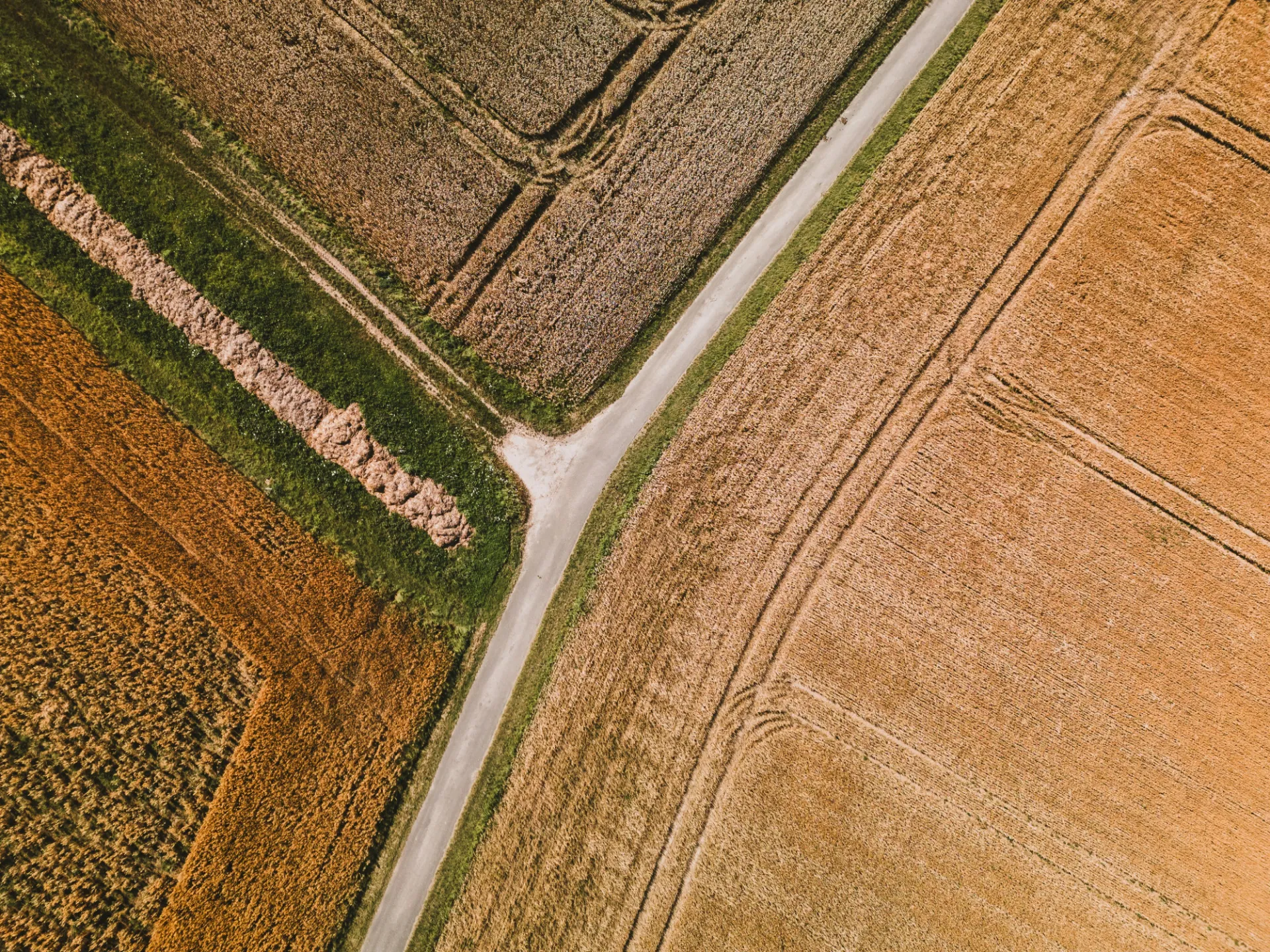
Planting season has begun across the Northern Hemisphere, and farmers are looking at their fields wondering whether their next harvest will happen. The fertilizers they depend on are either too expensive or unavailable due to yet another crisis in a shipping lane most people will never see, but everyone will eventually feel at the supermarket.
About one-third of globally traded synthetic fertilizers pass through the Strait of Hormuz, and its closure following the joint US-Israeli strikes on Iran since February 28, 2026, has already driven double-digit price increases for the nutrients growers depend on.[1] Recent history shows how this plays out. When Russia invaded Ukraine in 2022, fertilizer supplies were squeezed by sanctions and shipping constraints. Farmers could not afford to use as much fertilizer, harvests shrank, and food prices spiked to levels not seen in a generation. In the United States, for instance, food prices rose by 9.9%, the most significant annual increase since 1979 and the UN Food and Agriculture Organization (FAO) reported that the World Food Price Index reached an all-time high.[2] Governments worldwide scrambled to reshuffle already-stretched budgets toward food subsidies and emergency imports, and millions of people were pushed toward hunger.[3]
Food security is a national security issue as much as it is an agricultural and humanitarian issue, and it should be on the desk of every president and prime minister. Food shocks drive inflation. Inflation widens inequality. Inequality fuels social unrest. Unrest erodes institutional trust and accelerates democratic backsliding.[4] For instance, surging food prices played a key role in Egypt’s 2011 uprising and the eventual toppling of its government,[5] and in Sudan, the collapse of food imports and soaring prices created a catastrophic hunger emergency that is uprooting people and destabilizing the region.[6]
When countries treat food production as an agricultural issue rather than a core strategic risk, they leave themselves exposed. In most Western countries, exposure is dangerously high. Policy is still made inside agriculture ministries, on agriculture budgets, and on agriculture timelines. That is no longer adequate for the threat environment we now face.
In 1862, in the middle of a civil war, Abraham Lincoln signed the Morrill Act, creating the land-grant university system and elevating agriculture within the federal government at a moment of maximum national vulnerability.[7] He understood that a nation unable to feed itself could not secure itself. Michael Crow, Arizona State University president and former SIPA professor of Science and Technology Policy, argues that this was one of the United States' first deliberate national innovation strategies.[8] Lincoln treated food as strategic infrastructure and the Morrill Act aligned agricultural research with national power, built domestic capacity at scale, and ensured that food could never be weaponized against American interests.
A century and a half later, China has adapted that lesson to today’s times. Food security and innovation are explicit pillars of its recent five-year plan,[9] backed by sustained public research investment and coordinated state strategy. For decades, Chinese firms have been acquiring farmland, seed genetics, and supply chain systems across Africa, Latin America, and Southeast Asia.[10] They are systematically building the diversified, technology-backed food security approach that Lincoln would have recognized as statecraft. Beijing's calculation is that the countries that control agricultural technology and supply chains will hold a structural geopolitical advantage in an era defined by climate disruption and resource competition.
Western governments are, unfortunately, moving in the opposite direction. Many are implementing policies that slow innovation, while decreasing investments and weakening the food-system resilience that underpins national power. Take, for example, the European Union’s Farm to Fork Strategy, which aims to make food systems more sustainable by reducing the use of pesticides and fertilizers. While this may have long-term positive impacts on the environment, the bloc has not approved next-generation alternatives, such as safe and effective bio-based inputs and gene-edited crops, in time to replace what they are cutting out. Rural communities feel that decisions in Brussels are causing them to lose competitiveness. Farmers have responded by driving hundreds of tractors through the streets of Brussels, Berlin, and Paris to protest burdensome regulations, low farm-gate prices, and trade deals that they say allow cheaper imports from countries with weaker standards.[11]
The Farm Bill in the United States moves enormous sums every five years, but the vast majority is locked into the Supplemental Nutrition Assistance Program (SNAP), farmer income support, and conservation - with only a sliver directed toward the high-velocity research, deployment, and risk-sharing instruments that competitive food production requires.[12] Instead of serving as a national resilience mechanism, this policy has increasingly become a partisan battlefield. Congress named the 2026 House Farm Bill the ‘Farm, Food, and National Security Act,’ but the 34–17 committee vote, largely along party lines, shows that food production is still treated as a political bargaining chip rather than a bipartisan imperative.[13]
On top of this, investments in agricultural knowledge and innovation have declined as a share of agricultural output in OECD countries over the past two decades.[14] Private capital that converts research into market-ready solutions is also decreasing: global agrifoodtech venture capital fell from $56 billion in 2021 to $16 billion in 2024.[15]
The West’s approach to food production also leaves an untenable gap in talent. At the very moment that nations should be expanding strategic capabilities, many publicly funded universities are shrinking them. In the United Kingdom, the University of Nottingham has announced plans to suspend its long-running Agriculture BSc and related degrees, including agricultural business management and plant biology, for the 2026/27 intake, sparking concern about the future of agricultural education at a historically significant institution.[16]
In the United States, the recent foreign-aid funding freeze has weakened agricultural research at land-grant universities, with USAID-backed innovation labs at multiple institutions forced to halt projects and lay off staff.[17] The University of Tennessee’s Institute of Agriculture terminated eight research grants.[18] These decisions may look like localized budget adjustments, but together they amount to a slow-motion dismantling of the agronomists, soil scientists, biotechnologists, and extension experts that any serious national food security strategy depends on.
Governments know how to move when they decide something matters. When Washington decided that semiconductors were a strategic priority, the CHIPS Act put $52 billion behind domestic manufacturing virtually overnight.[19] AI infrastructure has been fast-tracked under executive authority.[20] The logic driving these decisions – that whoever controls foundational technologies holds a structural advantage in the world – applies with equal force to food production. It is simply not being applied.
For this to change, three things need to happen:
First, governments must increase investments in innovation and education for food production. Nations need to fund breakthrough science and help de-risk startups building the next generation of tools and technologies for the sector. That means investing in the bio economy and biomanufacturing, and using public procurement to pull better seeds, next-generation inputs, and precision agriculture technologies into everyday use. They should also prioritize funding and support for education programs that rebuild the talent pipeline that advanced food production urgently needs.
Second, they must fix regulations. The EU is restricting what farmers can use today without approving what they will need tomorrow. The United States was once the world's default jurisdiction for approvals of new crop protection technologies. It has now lost that position to Brazil, which many companies treat as the preferred launchpad for new agricultural inputs because its processes are faster and more predictable.[21] Governments should take action to modernize regulatory systems with science-based pathways for technology approvals and the agency capacity to make timely decisions.
Third, they must broaden food production options to reduce risk. Every government should look at its own food production and trade systems and ask: where are we exposed, where can we lead, and how do we reduce fragile dependencies? That means investing in domestic capacities while also securing multiple ways to source fertilizers, seeds, and critical foodstuffs. Although it can feel counterintuitive in an age of competition, governments also need to help partners bolster their food production systems, because it lowers the odds that any one shock will bring the whole system down.
Lincoln understood that in times of national vulnerability, agriculture and innovation had to be treated as high-priority instruments of the state. He built that understanding directly into institutions that shaped American power for generations. Today, leaders face the same task, but with less time, more powerful technologies, and greater geopolitical competition. The countries that treat food production as a national security priority, fund it like one, and build the right strategies around it will be better able to protect their people, absorb shocks, and shape the world’s balance of power.
Christine R. Gould operates at the nexus of food systems, innovation, and geopolitics. After a decade with Syngenta - one of the world’s leading agribusinesses - she founded Thought For Food, a global movement empowering next-generation innovators in over 180 countries to transform the future of food. Under her leadership, the initiative helped launch more than 100 startups in collaboration with partners such as Cargill, Danone, DSM, Google, and The Rockefeller Foundation. A member of the UN Food Systems Summit Advisory Committee, Gould now leads GIGA Futures, advising companies, governments, and investors on innovation and investment strategies for food production. Christine holds an MPA, with a concentration in Science & Technology Policy, from Columbia’s School of International and Public Affairs.
[1] “Farmers warned fertiliser prices could rise amid Middle East tensions” FitchRatings, “Fitch Ratings Raises Most Short-Term Fertiliser Price Assumptions”.
[2] Mittal, “Russia-Ukraine War: A Quantitative Analysis of Global fertilizer supply chains & investment Opportunities” Das, “Fertiliser crisis amid Russia-Ukraine war”.
[3] FSIN and Global Network Against Food Crises, Global Report on Food Crises 2025.
[4] Brinkman and Hendrix, “Food Insecurity and Conflict: Applying the WDR Framework”.
[5] Climate-Diplomacy, “Food Price Shocks in Egypt”.
[6] World Health Organization, “Public Health Situation Analysis - Sudan Conflict and Complex Emergency”.
[7] National Archives, “Morrill Act (1862)”.
[8] Crow and Dabars, “University-Based Research and Economic Development”.
[9] People's Republic of China, “Outline of the 15th Five-Year Plan for National Economic and Social Development (2026–2030)”.
[10] Gooch and Gale, “China’s Foreign Agriculture Investments”.
[11] Läpple et al., “Farmers’ Voices in European Protests: Diverse Complaints, Emotional Tones, and Policy Responses” “Thousands of tractors block Berlin traffic over plans to end diesel subsidy” Corbet, “Angry French farmers with tractors are back on the streets of Paris for another protest”.
[12] Blanding, “Conservation Is at a Crossroads with the New Farm Bill”.
[13]US House Committee on Agriculture Republicans, “About the Farm Bill”.
[14] OECD, “Agricultural Policy Monitoring and Evaluation 2025”.
[15] AgFunder, “Global AgriFoodTech Investment Report 2025”.
[16] Cupriak, “University of Nottingham suspends agriculture degree”.
[17] Reuters, “Trump Funding Freeze Upends Agricultural Research at US Universities”.
[18] Stephenson, “UT system loses $37.7M in federal grants; Institute of Agriculture is hardest hit”.
[19] Blevins, Kwon, and Sutter, “Frequently Asked Questions: CHIPS Act of 2022 Provisions and Implementation”.
[20] Reuters, “Trump EPA wants to fast track permits for AI infrastructure”.
[21] Mano and Samora, “Brazil's bioinputs market boasts four times global average growth, research shows”.