
Thucydides’ Trap or Alliance Trap? US-China Rivalry and the Diminishing Constraints of Alliance Politics
The article contributes to a debate about whether alliances lead to conflict or peace, going back to Thucydides’ Peloponnesian War and its applicability to the modern day. Graham Allison, seeking a structural argument and based on what he and many others view as the main cause of war for Thucydides, popularized the term “Thucydides’ trap” as “the natural, inevitable discombobulation that occurs when a rising power threatens to displace a ruling power.” Allison inferred Thucydides’ trap as a structural logic guiding great power competition, particularly the US-China rivalry. Trump’s weakening of US alliances and China’s hesitancy to form legally binding military alliances make war less likely, everything else being equal. With the United States as the reigning superpower and China as its most significant challenger, each has become less trapped by the constraints of their alliances.
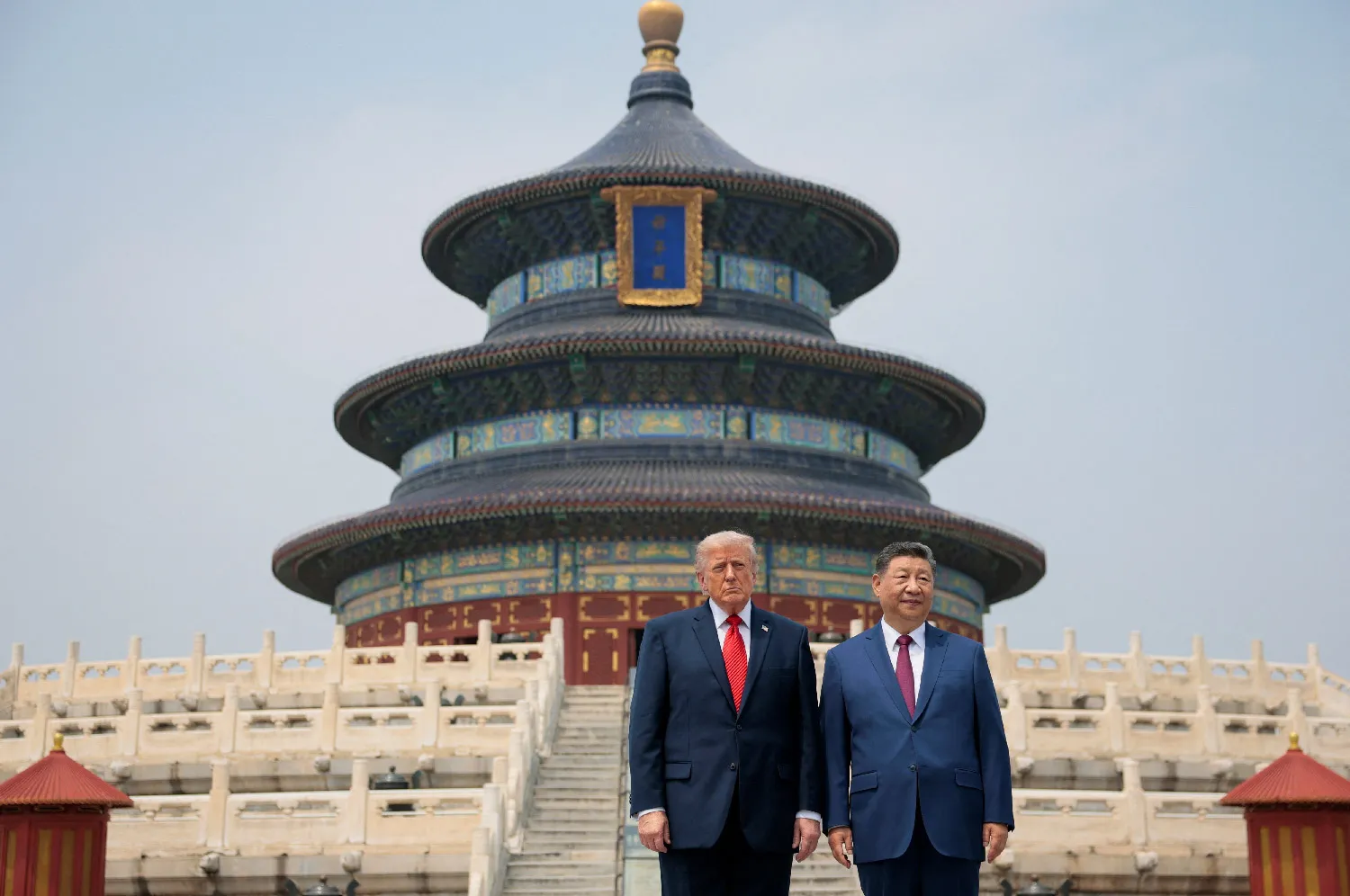
Graham Allison's "Thucydides's trap" has become the dominant framework for understanding the US-China rivalry. Yet, alliance behavior, not power transition dynamics, is the more precise and proximate cause of hegemonic war, both in the original Peloponnesian case and in the contemporary rivalry Allison invokes. As the Trump administration loosens traditional alliance commitments and China continues to resist legally binding military partnerships, both powers are stepping back from the very mechanisms that have historically dragged states into conflicts not of their own choosing. The structural conditions for a Thucydides's trap are weakening and alliance politics is the reason why.
Allison’s ‘Thucydides’ trap theory’ proposed an argument that hegemonic war is caused by the rise of a challenger and the fear that rise instills in the status quo power. The logic for Allison’s structural argument is that “intentions aside, when a rising power threatens to displace a ruling power, the resulting structural stress makes a violent clash the rule, not the exception.”[1] This argument reinforces realist theorizing of great power competition,[2] but it is not the only causal explanation for the Peloponnesian War provided by contemporary International Relations scholars. The other two prominent explanations are misguided leadership and the rational calculations of material and non-material benefits from winning the war.[3] Historians and classical scholars debate Thucydides’ causal thinking about the Peloponnesian War. Martin Ostwald, a noted classical scholar on ancient Greece, observed in 1988 that “it is difficult to think of any single passage in ancient Greek literature that has given rise to more intense controversy than Thucydides’ statement on the causes of the Peloponnesian War.”[4] Most historians who questioned Thucydides’s explanation ended up rejecting it, ironically based on a rich description provided by Thucydides himself. An enduring alternative explanation puts the blame on Athenian policy choices.[5]
Alliances are fundamental to a country’s ability to resist or attack foreign adversaries. Thus, a first order consideration is whether or not to form an alliance as, once an alliance is formed, a secondary game plays out between entrapment and abandonment.[6] This means that a country may be dragged into a fight not of its own choosing, but by its allies. Alliance behavior is a better causal variable than Thucydides’ trap, because it is both an underlying and proximate cause identified in the studies of the Peloponnesian War. Athens turned its alliances into an empire through coercion, which alarmed Sparta.[7] Sparta’s own alliance of city-states, the Peloponnesian League, had dominated Greek geopolitical affairs for two centuries.[8] The Peloponnesian War, thus, occurred between two rival alliances that involved all Greece and beyond. Further, Allison estimated that twelve out of the sixteen historical cases selected in his book are strong proof that war is likely to happen when facing a Thucydides’ trap. However, there are also other common features that are equally if not more important than Allison’s notion of the Thucydides’ trap, the alliance trap prominently among them. Twelve out of the sixteen cases also prove the saliency of alliance arguments (including nine out of ten cases of alliances leading to war and three out of six cases of no alliances correlated with no war), reinforced by case narratives.
The Peloponnesian case illustrates a broader methodological problem with Allison's framework. Underlying all these causal considerations for war lies a fundamental philosophical and scientific question of what counts as causality. In particular, Allison used a statistic of twelve out of sixteen cases to enhance his causal argument, a conclusion based on probability. A distinction needs to be made between single-case and general probability. As Jenann Ismael points out, “general probabilities apply to classes of events, and the basic form is conditional… Single-case probabilities, by contrast, apply to particular events rather than classes…and the basic form is unconditional.”[9] Put simply, applying general probability to a single case such as the US-China rivalry demands considerable caution.
These methodological concerns become especially consequential when applied to the US-China case, which Allison treats as the paradigmatic Thucydides's trap.[10] He opines that Thucydides’ trap “has set the world’s two biggest powers on a path to a cataclysm nobody wants, but which they may prove unable to avoid.”[11] His book devoted considerable attention to the unprecedented challenge posed by a rising China, yet the majority of its chosen cases fall well short of the scale and stakes of US-China competition. The only comparable cases are World War I, World War II, and the Cold War, which partly explains why thinkers often use them as an analogy for the current US-China rivalry. The question is then how similar the current US-China rivalry is to these analogies. One common feature in these four cases is the fact that the challenger was an autocracy against the status quo democracies. However, it is important to note that Thucydides’ trap offers a structural rather than ideological explanation.
The Cold War analogy is the most instructive of the comparable cases. If the current rivalry resembles that conflict, the logic and evidence would support a precarious peace because neither superpower really needs allies and commands a nuclear arsenal. As Kenneth Waltz explained, the defining advantage of a bipolar superpower structure is that each dominant power need only manage its relationship with the other, rather than making itself palatable to the broader international community.[12] The alliances the two superpowers formed were asymmetrical following a tradeoff between strategic autonomy for the dominant partners and security for smaller powers.[13] In other words, superpowers are less trapped by alliances than great powers.
The US has maintained strong security alliances with Japan and South Korea for over seven decades and continues to support Taiwan even though the formal alliance ended when Washington and Beijing resumed diplomatic relations. The US created a “hub and spokes” security framework in East Asia at the end of WWII to counter Soviet influence and to prevent governments in South Korea and Taiwan from adopting provocative defense policy toward Pyongyang and Beijing and then dragging the US into a military conflict not of its choosing. The US also made sure Japan as the prewar major power would be a reliable follower.[14] In addition, it gains bases and access and has a strategic interest in denying possible allies to adversaries.[15] At the same time, while security hawks argue that alliances deter rivals, there is a significant body of research suggesting that alliances may also accelerate the onset of war.[16] It is then possible that a weakening of traditional alliances may reduce the severity of future security conflicts.
The landscape grows more complex still when strategic partnerships, looser arrangements that fall short of formal alliance commitments, are taken into account.. By the end of the 2010s, the United States and China alone had over 130 strategic partnerships.[17] A typical sovereign country has numerous allies and partners, often involving countries hostile to each other. To think about alliances strategically, we should therefore think strategically about the whole network. How any given power navigates this network, whether favoring binding alliances or looser partnerships, shapes the overall risk of conflict in ways Allison's framework does not capture.
China's choices in this regard are particularly telling. Chinese thinkers do have an increasing interest in security alliances in recent years. Yet, they view partnerships as an alternative to alliances despite traditional concerns over China’s nonalignment policy, lessons learned about the “betrayal” of the former Soviet Union and North Vietnam, and costs for China’s export-oriented development model. While China’s alliances have increased (mainly in the form of non-aggression agreements), the country has only one mutual defense treaty with North Korea.[18] Additionally, Chinese consider partnerships to be more flexible and less risky amid tensions with the US.[19] Notably, where the United States is absent, China has not seized the opportunity to form mutual defense treaties. Put simply, Beijing’s hesitancy to form legally binding military alliances reveals a deep concern over alliance trap.
While some consider China to be expanding its global influence through partnerships, it has not matched the US in the number of traditional alliances it has. Beijing has not yet treated defection or a “loss” of a partner as an existential threat to its own security and prosperity. This explains partly why Beijing remained calm when the US and Israel launched a war against Iran, labeled by some analysts as China’s ally. Yet, China and Iran are not treaty allies, but strategic partners, which allowed the Chinese government flexibility in the crisis without getting directly involved militarily. Beijing is concerned about the escalation and spillover of the Iran War, but has not yet treated Iran as a domino against its own fundamental interests. Further, Beijing's restraint over Iran reflects a broader strategic calculus rooted in China's geographic and economic weight. As one of the largest countries in the world, China can always turn inward for security and economic viability. China has always been about China first, which does not equate with China alone. The country does not have to go alone in the current world where it engages with many willing partners on some dimensions at least.
Paradoxically, the United States appears to be moving in a similar direction. The Trump administration, for its own domestic and ideological reasons, is actually converging toward the Chinese strategy of reduced alliance dependence. Unlike Athens and Sparta, the US and People’s China are continental states and can choose to minimize the danger of being entrapped into a conflict not of its own choosing by allies.
President Donald Trump is weakening US alliances and simultaneously coercing allies to be subservient to his policy objectives. The establishment view in the US policy community is that the US needs allies to counter China, but it may be argued that with military revolution technologies, the U.S. military is less dependent on allies. Consolidation may actually enhance US military capabilities. Everything else being equal, weakening opposing global alliances makes a hegemonic war between the US and China less likely.
The debate over Thucydides's trap ultimately hinges on what drives states to war. Power transition dynamics create the conditions for rivalry, but it is alliance politics that converts rivalry into conflict or, as the present moment suggests, that can prevent it. Both the US and China are, for different reasons, retreating from the binding commitments that have historically made wars contagious. While this does not guarantee peace, it does suggest that the structural logic Allison fears is less deterministic than his framework implies. If policymakers in Washington and Beijing understand that their alliance choices are as consequential as their power competition, they may find more room to maneuver than Thucydides's trap allows.
Ming Wan is Professor and Associate Dean at George Mason University’s Schar School of Policy and Government. His Ph.D. was from the Government Department, Harvard University. He held postdoctoral fellowships at Harvard, the John M. Olin Institute for Strategic Studies, and the Pacific Basin Research Center. He was a visiting research scholar at Tsukuba University, a George Washington University-Woodrow Wilson International Center for Scholars Luce Fellow in Asian Policy Studies, and a visiting professor at Keio University in 2010–2012. He has authored ten books including East Asian International Relations: Evolution and Social Construction (Cambridge, 2025). He has published in journals including Foreign Affairs, Human Rights Quarterly, Journal of Conflict Resolution, Pacific Affairs, Pacific Review, and International Studies Quarterly and in edited volumes. His current research interests include the United States versus China.
[1] Graham Allison, Destined for War: Can America and China Escape Thucydides's Trap? (Boston: Mariner Books, 2018), p. xv.
[2] John J. Mearsheimer, The Tragedy of Great Power Politics, updated edition (New York: W.W. Norton, 2014).
[3] George Tridimas, “The Political Economy of the Original ‘Thucydides’ Trap”: A Conflict Economics Perspective on the Peloponnesian War,” Public Choice 202, nos. 1–2 (January 2025), 27–49.
[4] Quoted in Eric W. Robinson, “Thucydides on the Causes and Outbreak of the Peloponnesian War,” in Ryan K. Balot, Sara Forsdyke, and Edith Foster, eds., The Oxford Handbook of Thucydides (Oxford: Oxford University Press, 2017), 117.
[5] Ibid., 118.
[6] Glenn Snyder, “The Security Dilemma in Alliance Politics,” World Politics 36, no. 4 (July 1984), 461–95.
[7] James Lee, “Did Thucydides Believe in Thucydides’ Trap? The History of the Peloponnesian War and its Relevance to U.S.-China Relations,” Journal of Chinese Political Science 24 (2019), 67–86; Polly Low, “Thucydides on the Athenian Empire and Interstate Relations (431–404),” in Ryan K. Balot, Sara Forsdyke, and Edith Foster, eds., The Oxford Handbook of Thucydides (Oxford: Oxford University Press, 2017), 99–114.
[8] Ellen G. Millender, “Sparta and the Crisis of the Peloponnesian League in Thucydides’ History,” in Ryan K. Balot, Sara Forsdyke, and Edith Foster, eds., The Oxford Handbook of Thucydides (Oxford: Oxford University Press, 2017), 81–98.
[9] Jenann Ismael, “A Modest Proposal about Chance,” The Journal of Philosophy 108, no. 8 (August 2011), 418. The italics are in the original,
[10] Ming Wan, East Asian International Relations: Evolution and Social Construction (New York: Cambridge University Press, 2025), 248–279.
[11] Allison, Destined for War, xvi.
[12] Kenneth N. Waltz, Theory of International Politics (Long Grove, IL: Waveland Press, 2010), 170.
[13] James D. Morrow, “Alliances and Asymmetry: An Alternative to the Capability Aggregation Model of Alliances,” American Journal of Political Science 35, no. 4 (November 1991), 904–33.
[14] Victor Cha, Powerplay: The Origins of the American Alliance System in Asia (Princeton: Princeton University Press, 2018).
[15] King Mallory et al, U.S. Alliance and Partner Networks: Network Analysis of Their Health and Strength (Santa Monica: Rand, 2024).
[16] Jack S. Levy, “Alliance Formation and War Behavior: An Analysis of the Great Power, 1495–1975,” Journal of Conflict Resolution 25, no. 4 (December 1981), 581–613; Ido Oren, “The War Proneness of Alliances,” Journal of Conflict Resolution 34, no. 2 (June 1990), 208–33; Alastair Smith, “Alliance Formation and War,” International Studies Quarterly 39, no. 4 (December 1995), 405–25.
[17] Anna Michalski, “Diplomacy in a Changing World Order: The Role of Strategic Partnerships,” Swedish Institute of International Affairs, 2019, accessed September 17, 2025, https://www.ui.se/globalassets/ui.se-eng/publications/ui-publications/2019/ui-paper-no.-10-2019.pdf, 4.
[18] Zhen Han and Mihaela Papa, “Alliances in Chinese International Relations: Are They Ending or Rejuvenating?” Asian Security 17, no. 2 (2021), 158–177.
[19] Ketian Zhang, “Alliances with Chinese Characteristics? The Contents and Rationale of China’s Strategic Partnerships,” International Politics (2025), https://doi.org/10.1057/s41311-025-00701-0.