
Trump’s Taiwan Gamble: How U.S. Transactionalism Reshapes Beijing’s Risk Calculus
Since January 2025, Washington has increasingly treated economic and security commitments to Taiwan as renegotiable bargains. This article argues that such “transactional deterrence” can strengthen near-term denial—via accelerated arms transfers and industrial mobilization—while injecting volatility into punishment credibility and crisis management. Beijing’s late-2025 coercive rehearsal and sanctions preparation suggest that probing pressure, under shorter decision cycles, is now the central escalation risk.
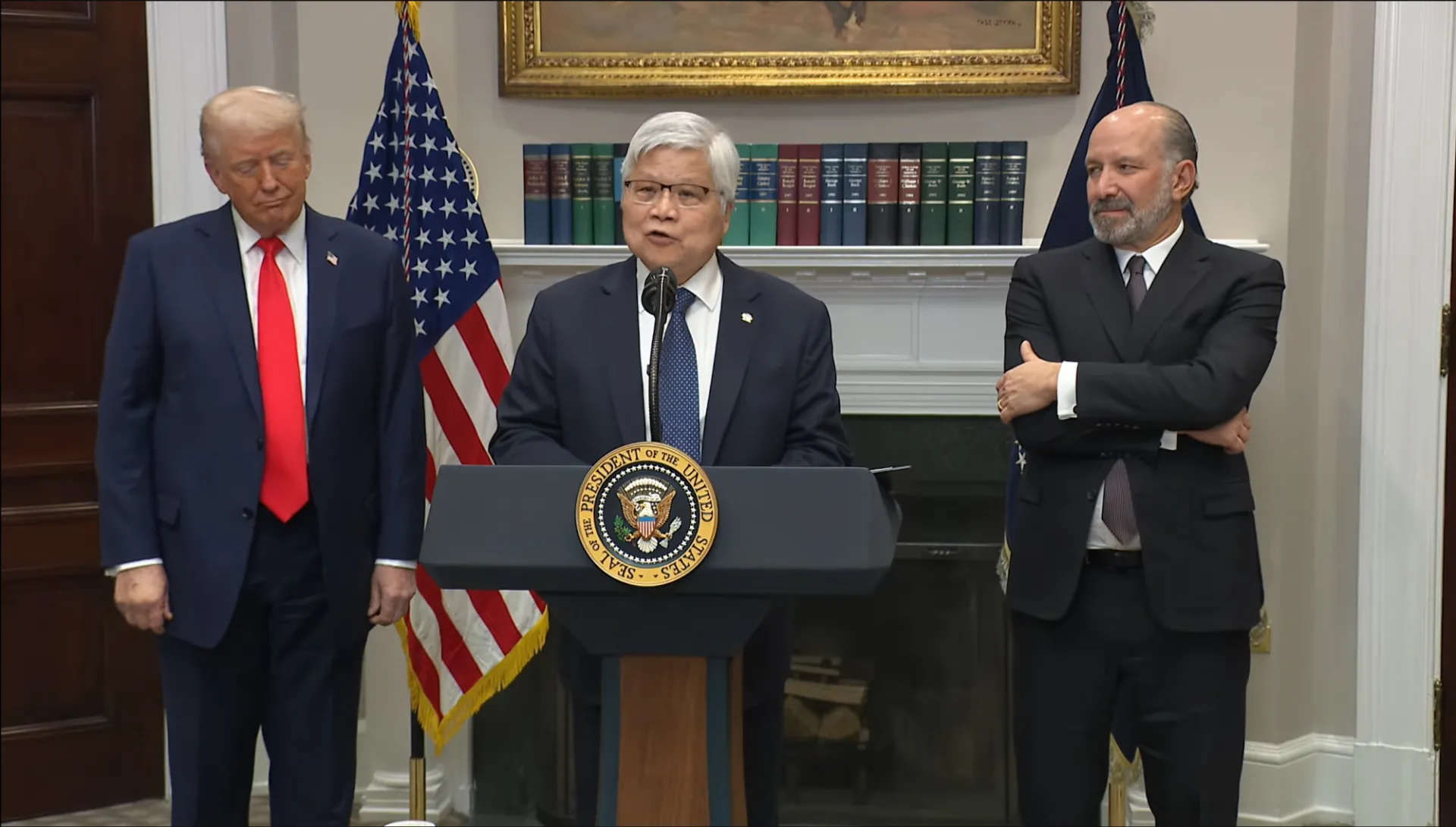
January 2026 concentrated the promise and peril of Washington’s approach. The U.S. and Taiwan announced a trade-and-investment agreement to bolster U.S. semiconductor manufacturing, pairing preferential tariff treatment with a $250 billion Taiwanese investment package and a $250 billion credit guarantee.[1] Reuters emphasized the economic scale—and the likely political shockwaves in Beijing.[2] In parallel, the White House issued a Section 232 proclamation to “adjust” imports of semiconductors and related equipment on national security grounds, directing negotiations with foreign jurisdictions as part of the plan of action.[3]
The same month, the administration completed U.S. withdrawal from the World Health Organization, reinforcing the broader signal that U.S. participation in international regimes is contingent and revisable.[4] Across the Strait, Beijing’s pressure campaign also sharpened. China launched its largest military drills around Taiwan to date at the end of December 2025, widely read as rehearsal for blockade dynamics and precision-strike packages below the threshold of full-scale invasion.[5] On January 17, 2026, Taiwan reported a Chinese reconnaissance drone entering Taiwanese airspace over the Pratas Islands (Dongsha) for several minutes—an episode combining gray-zone ambiguity with a pointed test of local defense posture.[6]
The key point is that transactionalism does not map cleanly onto “more” or “less” deterrence. Deterrence succeeds when a challenger expects aggression to fail (denial) or to impose unacceptable costs (punishment), and when both sides can imagine pathways to stop short of catastrophe. Transactional deterrence can strengthen denial by accelerating arms transfers, prioritizing munitions production, and pushing partners toward burden-sharing. Yet it can weaken punishment credibility and crisis stability by making commitments appear negotiable, politicizing economic tools, and thinning institutional routines that create off-ramps.
From Rules to Deals: Transactionalism as Strategic Conditionality
Institutionalized commitments reduce the scope for misperception. The Taiwan Relations Act anchors U.S. policy domestically by committing the United States to provide Taiwan “arms of a defensive character” and to maintain the capacity to resist coercion and threats to the island’s security.[7] Yet statutes and capabilities do not speak for themselves. Schelling’s core insight is that crises are tacit bargaining contests over risk and pain, where credibility is built through predictable behavior and shared expectations about escalation control.[8]
A transactional posture strains this architecture by introducing strategic conditionality. Public cues that support is renegotiable create credibility noise: even if material support rises, repeated signals that commitments are politically contestable invite Beijing to probe for the point at which Washington hesitates. The result resembles what Peter Harris and Jared McKinney describe as a tension between “strategic clarity” and crisis dynamics: measures designed to deter can also accelerate brinkmanship by compressing timelines and raising incentives to test resolve.[9]
In this sense, transactional deterrence is less a coherent doctrine than a distinctive credibility problem. It seeks leverage by increasing flexibility and by framing commitments as contingent bargains. But the very features that generate leverage in negotiation—reversibility and explicit conditionality—can undermine deterrence, because they shift attention from capabilities to political willingness in a crisis and encourage opponents to search for political seams.
Ambiguity Under Pressure: Taiwan as a Bargaining Variable
Strategic ambiguity aims to deter Beijing while avoiding incentives for Taipei to move toward formal independence. Its stability depends on a relatively predictable relationship between U.S. signals and U.S. follow-through. Hoo Tiang Boon and Hannah Elyse Sworn’s analysis of “Trumpian” strategic ambiguity in the first Trump administration is instructive: domestic politics and personalized deal-making can produce signals that are louder yet less anchoring, with transactional rhetoric competing against institutional commitments.[10]
The January 2026 semiconductor agreement illustrates the duality. Economically, it binds a critical sector more tightly into U.S. industrial policy and national security review. Strategically, it signals that Taiwan’s value is also transactional—embedded in tariff schedules, investment quotas, and negotiation mechanisms. This can strengthen deterrence if it raises U.S. stakes and deepens the political constituency for Taiwan’s security. It can weaken deterrence if Beijing concludes that limited coercion could generate U.S. pressure on Taipei: concessions framed as “de-risking” a trade arrangement, “stabilizing” markets, or avoiding a tariff shock.
The risk is therefore not a dramatic “grand bargain,” but incremental bargaining under duress. A challenger does not need certainty that Washington will abandon Taiwan. It needs only a credible belief that calibrated coercion can shift U.S. decision-making from coordinated deterrence toward transactional crisis management—extracting restraint, delay, or ambiguity in exchange for economic concessions or temporary de-escalation.
Beijing’s Countermove: Coercive Rehearsal and Sanctions Resilience
China’s late-December 2025 drills, framed as a warning against “external interference,” send a clear operational message: Beijing is investing in options below full invasion that shift the escalation burden onto Washington and Taipei. Quarantine and blockade concepts can be packaged as law enforcement or “customs control,” complicating legal and political thresholds for response. The Pratas drone episode fits this logic: selective, deniable acts test defenses, normalize intrusions, and probe whether limited moves create political hesitation.
The 2025 U.S. Defense Department report on China’s military and security developments documents the PLA’s modernization trajectory and the breadth of capabilities relevant to joint blockade and anti-access operations.[11] For deterrence, the key point is that these capabilities change what counts as a “test.” Washington’s credibility is no longer measured only by readiness to fight an invasion, but by willingness to incur sustained costs to break a blockade, maintain Taiwan’s economic lifelines, and absorb retaliation over time.
U.S. strategic messaging matters in this environment. The 2026 National Defense Strategy, released on January 23, 2026, emphasizes homeland defense and expects allies to assume greater responsibility, while also stressing strategic stability and military-to-military communication.[12] Regardless of intent, burden-sharing framing can be read as a cue about U.S. risk acceptance on behalf of partners. Beijing may interpret this as an invitation to explore whether calibrated pressure can separate U.S. commitments from allied support.
Geoeconomic Deterrence after the 2025–26 Tariff Cycle
Transactional deterrence operates as much through geoeconomics as through military posture. The reciprocal tariff architecture instituted in April 2025 and subsequent actions tracked by the Congressional Research Service underscore the breadth and fluidity of the current regime.[13] Fluidity can be strategically useful; it can also reduce deterrent clarity. If partners and adversaries cannot distinguish structural policy from negotiation leverage, punishment threats become less credible and coalitions less reliable.
Networked economic power is real, but it is not automatically usable. Farrell and Newman’s “weaponized interdependence” framework highlights how states exploit chokepoints in finance and supply chains to coerce others.[14] Chen and Evers similarly argue that supply-chain structures shape the feasibility and limits of economic statecraft in power transitions.[15] For Taiwan, the implication is sobering: credible economic punishment depends on coalition alignment, domestic resilience, and pre-planned measures that can be executed in crisis without improvisation.
Beijing’s use of rare earth export controls illustrates the counter-coercion problem. Reuters reported that China imposed export controls on key rare earths in April 2025 and tightened restrictions again in October 2025, targeting defense and semiconductor users.[16] This is not merely signaling; it is crisis preparation designed to raise the expected costs of Western sanctions and to complicate rapid rearmament. RAND’s study on economic deterrence in a China contingency concludes that pre-crisis economic measures can influence expectations, but only when credible, coordinated, and resilient to retaliation.[17]
Why 2027 Matters: Benchmarks, Path Dependence, Probing
The “2027” debate is best treated as a planning benchmark, not a prediction. Benchmarks matter because they compress decision cycles and create incentives to probe. If Beijing believes Taiwan’s defenses and allied coordination are improving quickly, it may favor coercion sooner, before denial hardens. If Beijing believes U.S. commitments are politically variable, it may probe to discover whether calibrated coercion can win concessions at tolerable risk.
Blockade and quarantine scenarios are especially relevant under these conditions. CSIS war-gaming on a Chinese blockade underscores that coercion short of invasion can be operationally plausible and strategically attractive precisely because it shifts the escalation burden onto defenders and tests coalition endurance over time.[18] Transactional deterrence can inadvertently reinforce that logic: if Beijing expects Washington to bargain over tariffs and investment commitments, it may test whether a blockade can generate “deal pressure” rather than a coordinated counter-coercion response.
Institutional reversibility interacts with these dynamics. The United States formally notified withdrawal from the Paris Agreement effective January 27, 2026, and the Congressional Research Service has detailed the process and potential effects.[19] In isolation, climate policy is not Taiwan policy. Yet repeated exits from international commitments contribute to a broader informational environment in which U.S. policy appears more reversible—an input that adversaries may incorporate when estimating coalition reliability and time horizons.
Geoeconomic bargaining also creates institutions that can either stabilize or destabilize crisis expectations. The White House’s joint statement on the U.S.–China economic and trade meeting in Stockholm illustrates how tariff pauses and negotiation mechanisms are framed as tools for managing market expectations and bilateral frictions.[20] In a Taiwan contingency, such mechanisms could help limit panic and create channels for de-escalation; they could also tempt decision-makers toward “trade-for-restraint” logics that Beijing might exploit. The analytical task is to ensure that economic dialogue supplements deterrence coordination rather than substituting for it.
Conclusion: Re-Anchoring Deterrence without Turning Taiwan into a Bargaining Chip
Stabilizing deterrence under transactional conditions requires rebuilding stabilizers without abandoning flexibility. Four steps matter. First, disciplined signaling: minimize public conditionality and communicate privately what would trigger coordinated responses. Second, blockade-ready planning: endurance (energy, logistics, convoys) and coalition cohesion are central if coercion takes the form of quarantine rather than invasion. Third, prepared geoeconomic deterrence: sanctions and export-control packages must be pre-negotiated, sequenced, and paired with compensation mechanisms to survive retaliation. Finally, thicken crisis-management channels—military-to-military and political—so off-ramps exist when miscalculation looms, and insulate them from domestic tariff bargaining during acute escalation.
Two final variables underline why “Taiwan policy” cannot be reduced to U.S. signaling alone. Taiwan is not a passive object of U.S.–China bargaining; its own strategy shapes the feasibility of denial and the political viability of endurance. Taiwan’s 2025 Quadrennial Defense Review emphasizes resilience, interoperability, and countering gray-zone pressure—areas that matter as much as headline platforms.[21] And Beijing’s own white paper on the “Taiwan question” makes clear that coercion is embedded in a long-term political project rather than a temporary tactic.[22] Treating Taiwan’s strategy and China’s political objectives as core variables is essential: deterrence is strongest when Taipei’s preparations, Washington’s signaling, and allied economic planning reinforce one another.
Transactional deterrence is not fated to fail. But it is structurally brittle. By making commitments look negotiable, it invites probing. By politicizing economic tools, it increases surprise and retaliation risk. By thinning institutional routines, it narrows off-ramps. The gamble is that tougher near-term measures will compensate for noisier political signals. A more robust approach would retain flexibility while rebuilding predictability: clearer private coordination, rehearsed blockade contingencies, and credible, coalition-backed geoeconomic responses that reduce incentives for miscalculation, and above all, avoiding allowing short-term economic bargains to be read—by Beijing or Taipei—as substitutes for baseline assurances against coercion.
Stefan Messingschlager is a historian and political scientist at the Chair of Modern History, Helmut Schmidt University, Hamburg, and an Associate Researcher at the Chair of Contemporary Chinese Studies, Julius-Maximilians-University Würzburg. His research focuses on contemporary Chinese history and politics, with particular emphasis on Sino-Western relations and the evolution of Western China expertise since 1949.
[1] U.S. Department of Commerce, “Fact Sheet: Restoring American Semiconductor Manufacturing Leadership Through an Agreement on Trade & Investment with Taiwan,” January 15, 2026, https://www.commerce.gov/news/fact-sheets/2026/01/fact-sheet-restoring-american-semiconductor-manufacturing-leadership (accessed January 24, 2026).
[2] Trevor Hunnicutt, “US and Taiwan reach trade deal, with semiconductor chips and China in focus,” Reuters, January 16, 2026, https://www.reuters.com/world/china/us-taiwan-reach-trade-deal-focused-semiconductors-commerce-department-says-2026-01-15/ (accessed January 24, 2026).
[3] The White House, “Adjusting Imports of Semiconductors, Semiconductor Manufacturing Equipment, and Their Derivative Products Into the United States” (Proclamation), January 14, 2026, https://www.whitehouse.gov/presidential-actions/2026/01/adjusting-imports-of-semiconductors-semiconductor-manufacturing-equipment-and-their-derivative-products-into-the-united-states/ (accessed January 24, 2026).
[4] U.S. Department of Health and Human Services, “United States Completes WHO Withdrawal,” January 22, 2026, https://www.hhs.gov/press-room/united-states-completes-who-withdrawal.html (accessed January 24, 2026); U.S. Department of Health and Human Services, “Fact Sheet: U.S. Withdrawal from the World Health Organization,” content last reviewed January 22, 2026, https://www.hhs.gov/press-room/fact-sheet-us-withdrawal-from-the-world-health-organization.html (accessed January 24, 2026).
[5] Defense Security Cooperation Agency, “Taipei Economic and Cultural Representative Office in the United States – High Mobility Artillery Rocket Systems and Related Equipment,” December 17, 2025, https://www.dsca.mil/Press-Media/Major-Arms-Sales/Article-Display/Article/4363081/taipei-economic-and-cultural-representative-office-in-the-united-states-high-mo (accessed January 24, 2026); Ben Blanchard and Michael Martina, “US announces $11 billion arms package for Taiwan, largest ever,” Reuters, December 18, 2025, https://www.reuters.com/world/china/taiwan-says-us-has-initiated-111-billion-arms-sale-procedure-2025-12-18/ (accessed January 24, 2026); Yimou Lee, Joe Cash, and Liz Lee, “China encircles Taiwan in massive military display,” Reuters, December 30, 2025, https://www.reuters.com/world/china/china-launches-live-firing-drills-around-taiwan-its-biggest-war-games-date-2025-12-30/ (accessed January 24, 2026).
[6] Reuters, “Taiwan says Chinese drone made ‘provocative’ flight over South China Sea island,” January 17, 2026, https://www.reuters.com/world/china/taiwan-says-chinese-drone-made-provocative-flight-over-south-china-sea-island-2026-01-17/ (accessed January 24, 2026); Republic of China (Taiwan), Ministry of National Defense, “國防部發布新聞稿,說明「中共監偵無人機進入臺灣西南空域活動,並接近東沙」乙情” [MND press release], January 17, 2026, https://www.mnd.gov.tw/en/Publication/85974 (accessed January 24, 2026); Financial Times, “China flies drone into Taiwan’s airspace for first time,” January 17, 2026, https://www.ft.com/content/4b73bf1c-76a4-426f-a335-de8528b24acb (accessed January 24, 2026).
[7] U.S. Congress, Taiwan Relations Act, Public Law 96-8, 93 Stat. 14 (April 10, 1979), https://www.congress.gov/96/statute/STATUTE-93/STATUTE-93-Pg14.pdf (accessed January 24, 2026).
[8] Thomas C. Schelling, Arms and Influence (New Haven, CT: Yale University Press, 1966), https://yalebooks.yale.edu/book/9780300246742/arms-and-influence/ (accessed January 24, 2026).
[9] Peter Harris and Jared M. McKinney, “Strategic clarity or calamity? Competing logics of deterrence in the Taiwan Strait,” International Affairs 100, no. 3 (May 2024): 1171–1187, https://doi.org/10.1093/ia/iiae071; Nien-chung Chang-Liao and Tzu-han Fang, “Maintaining Strategic Ambiguity: The Taiwan Debate,” Washington Quarterly 44, no. 4 (2021): 71–89, https://doi.org/10.1080/0163660X.2021.1997875.
[10] Hoo Tiang Boon and Hannah Elyse Sworn, “Strategic ambiguity and the Trumpian approach to China–Taiwan relations,” International Affairs 96, no. 6 (November 2020): 1487–1508, https://doi.org/10.1093/ia/iiaa160.
[11] U.S. Department of Defense, Annual Report to Congress: Military and Security Developments Involving the People’s Republic of China 2025 (Washington, DC: Department of Defense, December 23, 2025), https://media.defense.gov/2025/Dec/23/2003849070/-1/-1/1/ANNUAL-REPORT-TO-CONGRESS-MILITARY-AND-SECURITY-DEVELOPMENTS-INVOLVING-THE-PEOPLES-REPUBLIC-OF-CHINA-2025.PDF (accessed January 24, 2026).
[12] U.S. Department of Defense, 2026 National Defense Strategy (Washington, DC: Department of Defense, January 23, 2026), https://media.defense.gov/2026/Jan/23/2003864773/-1/-1/0/2026-NATIONAL-DEFENSE-STRATEGY.PDF (accessed January 24, 2026).
[13] The White House, “Regulating imports with a reciprocal tariff to rectify trade practices that contribute to large and persistent annual United States goods trade deficits” (Executive Order 14257), April 2, 2025, https://www.whitehouse.gov/presidential-actions/2025/04/regulating-imports-with-a-reciprocal-tariff-to-rectify-trade-practices-that-contribute-to-large-and-persistent-annual-united-states-goods-trade-deficits/ (accessed January 24, 2026); Congressional Research Service, Keigh E. Hammond and William F. Burkhart, Presidential 2025 Tariff Actions: Timeline and Status, R48549 (Washington, DC: Congressional Research Service, January 12, 2026), https://www.congress.gov/crs-product/R48549 (accessed January 24, 2026).
[14] Henry Farrell and Abraham L. Newman, “Weaponized Interdependence: How Global Economic Networks Shape State Coercion,” International Security 44, no. 1 (Summer 2019): 42–79, https://doi.org/10.1162/isec_a_00351.
[15] Ling S. Chen and Miles M. Evers, “‘Wars without Gun Smoke’: Global Supply Chains, Power Transitions, and Economic Statecraft,” International Security 48, no. 2 (Fall 2023): 164–204, https://doi.org/10.1162/isec_a_00473.
[16] Lewis Jackson, Amy Lv, Eric Onstad, and Ernest Scheyder, “China hits back at US tariffs with export controls on key rare earths,” Reuters, April 4, 2025, https://www.reuters.com/world/china-hits-back-us-tariffs-with-rare-earth-export-controls-2025-04-04/ (accessed January 24, 2026); Reuters, “China expands rare earths restrictions, targets defense and chips users,” October 10, 2025, https://www.reuters.com/world/china/china-tightens-rare-earth-export-controls-2025-10-09/ (accessed January 24, 2026); Gracelin Baskaran and Meredith Schwartz, “The Consequences of China’s New Rare Earths Export Restrictions,” Center for Strategic and International Studies, April 14, 2025, https://www.csis.org/analysis/consequences-chinas-new-rare-earths-export-restrictions (accessed January 24, 2026).
[17] Howard J. Shatz, Marco Hafner, Naoko Aoki, Peter Dortmans, Timothy R. Heath, and Fiona Quimbre, Economic Deterrence in a China Contingency (Santa Monica, CA: RAND Corporation, 2025), https://www.rand.org/pubs/research_reports/RRA4022-1.html (accessed January 24, 2026); Gerard DiPippo and Jude Blanchette, “Sunk Costs: The Difficulty of Using Sanctions to Deter China in a Taiwan Crisis,” Center for Strategic and International Studies, June 12, 2023, https://www.csis.org/analysis/sunk-costs-difficulty-using-sanctions-deter-china-taiwan-crisis (accessed January 24, 2026); Logan Wright, Anna Ashton, and Agatha Kratz, Sanctioning China in a Taiwan Crisis: Scenarios and Risks (New York: Rhodium Group, June 22, 2023), https://rhg.com/wp-content/uploads/2024/02/Sanctioning-China-in-a-Taiwan-Crisis-Scenarios-and-Risks-1.pdf (accessed January 24, 2026).
[18] Mark F. Cancian, Matthew F. Cancian, and Eric Heginbotham, Lights Out?: Wargaming a Chinese Blockade of Taiwan (Washington, DC: Center for Strategic and International Studies, July 31, 2025), https://csis-website-prod.s3.amazonaws.com/s3fs-public/2025-07/250730_Cancian_Taiwan_Blockade.pdf (accessed January 24, 2026).
[19] United Nations, Depositary Notification C.N.71.2025.TREATIES-XXVII.7.d, “Paris Agreement—United States of America: Withdrawal,” January 27, 2025, https://treaties.un.org/doc/Publication/CN/2025/CN.71.2025-Eng.pdf (accessed January 24, 2026); Congressional Research Service, Jonathan D. Haskett, U.S. Withdrawal from the Paris Agreement: Process and Potential Effects, R48504 (Washington, DC: Congressional Research Service, April 14, 2025), https://www.congress.gov/crs-product/R48504 (accessed January 24, 2026).
[20] The White House, “Joint Statement on U.S.-China Economic and Trade Meeting in Stockholm,” August 11, 2025, https://www.whitehouse.gov/briefings-statements/2025/08/joint-statement-on-u-s-china-economic-and-trade-meeting-in-stockholm/ (accessed January 24, 2026).
[21] Republic of China (Taiwan), Ministry of National Defense, “2025 Quadrennial Defense Review” (English), March 2025, https://www.mnd.gov.tw/en/InformationServices/QDR (accessed January 24, 2026); Marta Kepe and Scott W. Harold, Building Taiwan’s Resilience: Insights into Taiwan’s Civilian Resilience Against Acts of War (Santa Monica, CA: RAND Corporation, 2025), https://www.rand.org/pubs/research_reports/RRA3388-1.html (accessed January 24, 2026).
[22] State Council Information Office of the People’s Republic of China, The Taiwan Question and China’s Reunification in the New Era (White Paper, August 2022), https://english.scio.gov.cn/whitepapers/2022-08/10/content_78365819.htm (accessed January 24, 2026).