
Trump’s Maximum Pressure and the Risks of Escalation in Iran
The article evaluates the implications of Israel’s military strikes on Iranian nuclear and military assets in June 2025 and the 2026 U.S.–Israeli strikes against Iran (Operation Epic Fury), arguing for de-escalation to prevent a regional war. It proposes to contain the conflict amid ongoing wars and humanitarian crises in the Middle East that threaten global security and stability. Unlike the 2025 short-term operations, the current war in Iran carries multidimensional risks, from regional to international implications, including prolonged conflict, disrupting global oil supplies, sparking proxy wars, cyber warfare, humanitarian crises, and fueling anti-American sentiments that might result in international terrorism.
Note: This article was written before the 2026 U.S.-Israeli strikes on Iran. It aims to help readers understand Trump’s escalating second-term policy and its profound consequences.
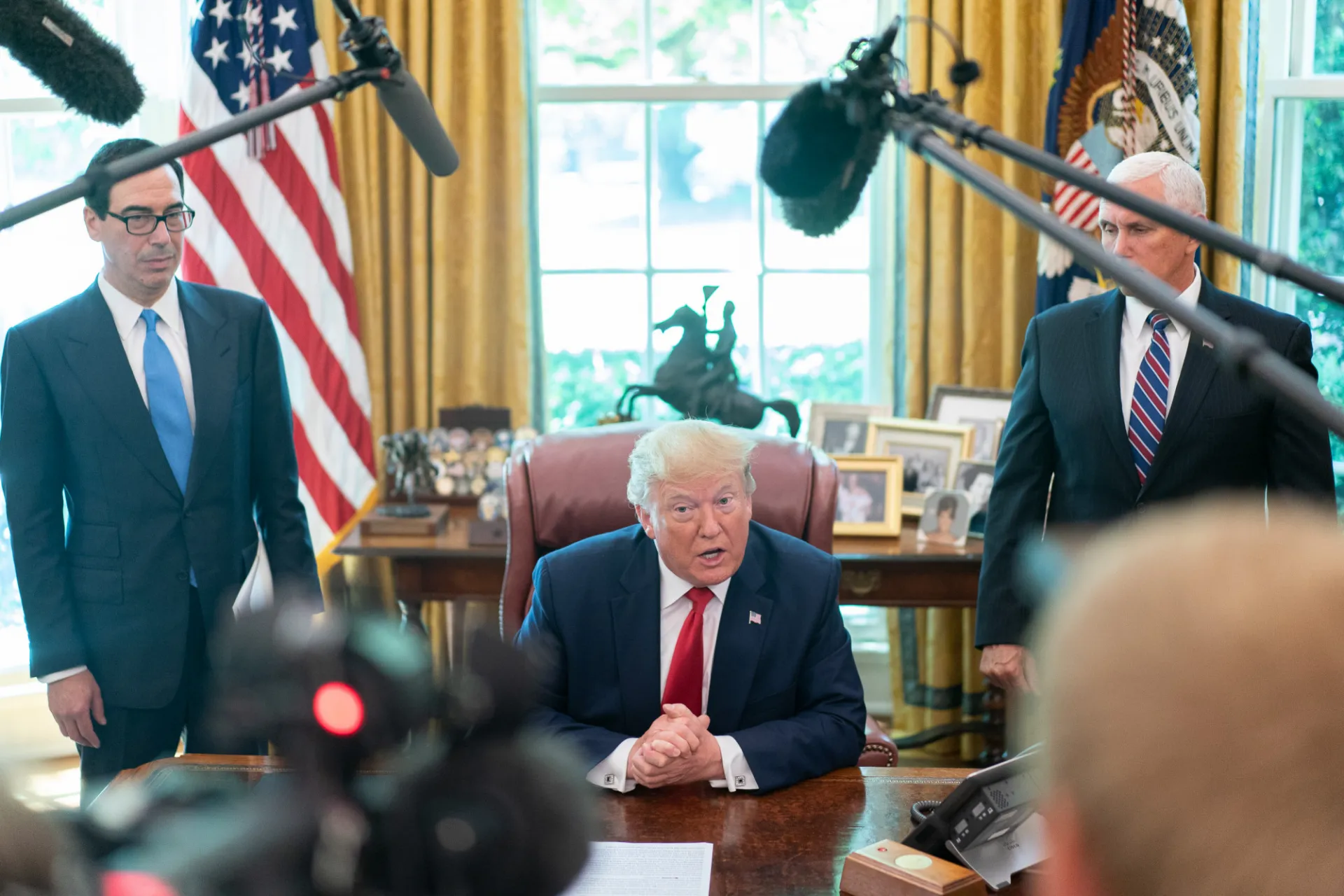
U.S. Policy Toward Iran Under Trump’s Second Term in 2025
On the night of June 12–13, 2025, Israel launched major airstrikes on Iranian military and nuclear sites, killing top Iranian military officials and damaging uranium enrichment facilities. Framing the attack as a preemptive move against Iran's advancing nuclear program. Iran responded with retaliatory strikes against Israel. Israel has pledged to hold Iran's leader accountable for “war crimes.”[1] President Trump publicly supported the Israeli action, describing it as “excellent,” and reaffirming America’s commitment to its closest regional ally, and demanded Iran's “unconditional surrender.”[2]
The return of Donald Trump to the White House in 2025 has ushered in a renewed version of the hardline stance he adopted toward Iran during his first term. Building upon the foundations of his "maximum pressure" campaign, he reimposed extensive economic sanctions targeting the nation's oil exports, banking system, and defense sector.[3] These measures aim to curb Iran's nuclear capabilities and restore U.S. influence over regional security dynamics. Trump has consistently identified Iran as a central threat to both Middle East stability and U.S. interests, labeling it a state sponsor of terrorism and a destabilizing force in Iraq, Syria, and Yemen.[4] Washington aims to prevent Iran from acquiring nuclear weapons that could undermine the global nonproliferation regime and avert a regional arms race, prompting Middle Eastern states to pursue their own nuclear capabilities.
While remaining cautious about the risks of escalating the situation into a full-scale regional war, on June 22, 2025, the United States surprised the world by executing Operation Midnight Hammer and striking three Iranian nuclear facilities.[5] The strikes marked the first direct U.S. military entry into the Israel–Iran conflict, aiming to degrade Iran’s nuclear capabilities without initiating a ground war. Tehran responded by launching retaliatory strikes at Israel. [LG1]
On February 28, 2026, the U.S. and Israel launched “Operation Epic Fury” against Iran after failed nuclear talks, targeting Iran's ballistic missiles, navy, and terrorist proxy support to prevent nuclear armament.[6] Unlike the 2025 strikes, which are short-term operations, the current ongoing war in Iran carries multidimensional risks, with both regional and global implications, including prolonged conflict, a global economic crisis, expanded proxy and cyber warfare, fueling anti-American sentiments that might result in international terrorism, and worsening humanitarian crises in an already fragile region.
The Potential Consequences of the War in Iran in 2026
On a regional level, the recent US strikes against Iran raised global alarm, leading to a possible regional conflict and threatening the security of the U.S. allies in the Gulf, as Iran's retaliation reached Israel, U.S. military bases, oil depots, and other infrastructure across the Gulf region, including Bahrain, Kuwait, Qatar, UAE, host airbases with US assets.[7]Attacks targeting key maritime routes, such as the Strait of Hormuz, could exacerbate regional instability, with potential consequences for global oil markets and economic indicators, including inflation.[8] These facts will present a significant challenge for embattled governments and financial institutions alike.
A major risk is the potential escalation of proxies in the Axis of Resistance, including Iran's allies like Hezbollah, Hamas, Houthis, and other Shia militant groups in Syria and Iraq. Iran relies heavily on proxies to project power and deter Western influence in the region; some of these groups may escalate attacks to demonstrate loyalty to Tehran.[9]The conflict would also deepen existing sectarian divides, fueling violence between Shia and Sunni groups and triggering cycles of retaliation, displacement, and rising communal tensions. Fragile states already facing economic hardship and political unrest could experience governance collapse, creating a vacuum for extremist groups to grow and further destabilize the region.
The killing of Khomeini may strengthen Shia sympathizers in the region, allowing them to recruit fighters, improve training, and increase attacks on Israel and the U.S., potentially leading to retaliation and international terrorism. Federal authorities have warned about potential Iranian attacks within the U.S. soil itself, by several means, including through cyberattacks and various groups or individuals it has forged connections with within North America. Cyber retaliation, including attacks on U.S. infrastructure, has already been reported.[10] The FBI warned California police that Iran may retaliate for U.S. attacks by launching drones at the West Coast, raising concerns about potential attacks on American forces near the Mexican border.[11]
On a global scale, this conflict could lead to another proxy war between the United States and major powers such as Russia, China, and North Korea, all of whom are allies of Iran. These powers may engage indirectly by providing arms, intelligence, cyber capabilities, and other resources to their respective proxies, thereby intensifying the conflict without direct military engagement. Specifically, it has been reported that Russia is providing Iran with intelligence about the locations and movements of American troops, ships, and aircraft.[12] Additionally, the U.S. faces longstanding and intensifying cyber threats—from Chinese espionage and pre-positioning on critical infrastructure to ransomware campaigns that disrupt essential services. Trump's recently released cyber strategy raises doubts about whether the administration is prepared to address these threats.[13]
Such proxy warfare complicates diplomatic efforts, increases the risk of miscalculation, and heightens the potential for a broader international war. The global community finds itself in a precarious situation where local hostilities could quickly escalate into a wider crisis, undermining the existing framework of international security. Moreover, the volatility of global political alliances—especially under a second Trump administration known for its unpredictable foreign policy shifts—means that traditional loyalties, including European closest allies, cannot be taken for granted. This uncertainty could further destabilize dalliances and deepen the scope of conflict, making peace more elusive and war more entrenched.
Policy Recommendations
Urgent diplomacy, confidence-building, and international cooperation are essential to prevent escalation and promote peace. The international community must work on preventing escalation by developing a long-term peace strategy. First, reviving and expanding the JCPOA, the nuclear deal that aims to limit Iran's nuclear capabilities. This can be achieved by prioritizing the capping of Iran’s nuclear activities under international inspection and ensuring its program remains strictly civilian.[14]This step is to be enforced through dedicated regional diplomatic envoys as confidence-building measures, alongside International Atomic Energy Agency (IAEA) oversight to monitor facilities, manage the crisis, and ensure compliance.
Despite the U.S. withdrawal and Israel’s skepticism, the framework of the agreement remains a tested foundation for continued diplomacy. To enhance transparency, the agreement can be complemented by regional security guarantees and stricter verification mechanisms.[15] By combining diplomatic efforts to limit Iran's nuclear capabilities with regional security assurances, this approach can reduce the likelihood of regional conflict.
Second, regional arms control initiatives, akin to those implemented in post-Cold War Europe, can help establish a security framework that incorporates both Iran and Israel, potentially under the auspices of the United Nations or a model similar to the Organization for Security and Co-operation in Europe (OSCE).[16]The U.S. should also consider establishing a unified regional defense security framework, similar to the Middle East Defense Organization (MEDO) proposed by the U.S. and the UK in 1951. These regional security partnerships can enhance the defensive capabilities of Gulf States to protect themselves against Iranian missiles and proxy threats.
Third, a long-term peace strategy is necessary to avoid future conflicts. Track II diplomacy, an academic and civil society dialogue, can build the foundation for long-term understanding, even if official relations remain frozen. [17] This step involves informal dialogue through academic exchanges, discussions within civil society, and backchannel communication, which play a crucial role in preventing and potentially resolving conflicts. Over time, such dialogues can foster mutual understanding, humanize each side, and create a foundation for future peace talks when the political climate shifts. A key example of its effectiveness is the Oslo Backchannel (1985-1993), where Norwegian academics facilitated Israeli-Palestinian talks during the freeze negotiations. The discussions fostered trust and led to breakthroughs that contributed to the 1993 Oslo Accords and demonstrated how informal dialogue can offer an essential path toward long-lasting peace.
The international community must recognize that the stakes extend beyond geopolitics to humanitarian concerns. Urgent diplomacy and pressure on both parties are needed to prevent escalations, as the consequences would be severe for the entire Middle East and beyond.
Conclusion
The United States should avoid a large-scale ground war. Lessons from Iraq and Afghanistan underscore the immense human, financial, and strategic costs of prolonged wars. A long war can overstretch U.S. military capacity, weaken its ability to defend allies and economic interests in the Gulf, undermine credibility among partner states hosting U.S. military bases, worsen regional instability, fuel terrorism, refugee flows, cyber clashes, and sectarian strife.
The ongoing conflict in Gaza, instability in Lebanon, and unrest in Syria and Iraq have created millions of refugees, increased extremist recruitment, and strained aid systems. A prolonged war in Iran would deepen this destruction and seriously weaken fragile state structures across the region and threaten the global economy.
In a best-case scenario, the conflict may lead to the collapse or reform of the current Iranian regime, paving the way for a more moderate government willing to normalize relations with Israel, foster peaceful cooperation with neighboring Arab states, and integrate more constructively into the international community. Such a shift could mark the beginning of a new chapter in Middle Eastern diplomacy, characterized by mutual economic interests, regional security frameworks, and the end of decades of ideological hostility.
Conversely, escalation remains a highly probable and dangerous path. A full-scale regional war could erupt, especially if proxy forces supported by Iran (backed by Russia, China, and North Korea) confront U.S.-aligned actors, including Western allies and Gulf states. The entanglement of global powers through these alliances risks transforming a regional conflict into a broader international war. This uncertainty could deepen the scope of conflict, making peace more elusive and war more entrenched.
Dr. Widyane Hamdach is a professor of political science and UN programs coordinator at Saint Peter’s University. She earned her PhD in global affairs from Rutgers University, specializing in global governance, Middle Eastern studies, and international relations. With over 17 years of experience as a TV reporter and producer, she has covered international affairs at the United Nations for various media outlets. Dr. Hamdach is the author of the book Framing the War on Terror: Arab Media Perspectives and Geopolitical Realities (2026).
[1] “Israel-Iran War: Israeli Hospital Treats Victims of Iranian Missile Strike,” CBS News, June 18, 2025, https://www.cbsnews.com/news/israel-iran-war-hospital-iranian-missile-soroka/.
[2] Steven Nelson, “Trump Calls Israel’s Attack on Iran ‘Excellent,’ Warns ‘a Lot More’ to Come,” New York Post, June 13, 2025, https://nypost.com/2025/06/13/us-news/trump-calls-israels-attack-on-iran-excellent-warns-a-lot-more-to-come/; Ruth Sherlock, “Trump Praises Israel's Attack on Iran, Vows More Support,” NPR, June 18, 2025, https://www.npr.org/2025/06/18/nx-s1-5437782/iran-israel-conflict-trump.
[3] Sina Azodi, “The Maximum Pressure Campaign Undermines Trump’s National Security Strategy,” Atlantic Council, February 6, 2020, https://www.atlanticcouncil.org/blogs/iransource/the-maximum-pressure-campaign-undermines-trumps-national-security-strategy/.
[4] “President Trump’s Speech to the Arab Islamic American Summit – the White House.” 2017. The White House. May 21, 2017. https://trumpwhitehouse.archives.gov/briefings-statements/president-trumps-speech-arab-islamic-american-summit/.
[5] “U.S. Strikes Against Iran Nuclear Facilities an ‘Incredible, Overwhelming Success,’” Reuters, June 22, 2025, https://www.reuters.com/world/middle-east/us-strikes-against-iran-nuclear-facilities-incredible-overwhelming-success-2025-06-22/.
[6] The White House. “Operation Epic Fury: Decisive American Power to Crush Iran’s Terror Regime.” March 12, 2026. https://www.whitehouse.gov/articles/2026/03/operation-epic-fury-decisive-american-power-to-crush-irans-terror-regime/.
[7] Staff, Al Jazeera. 2026. “Multiple Arab States That Host US Assets Targeted in Iran Retaliation.” Al Jazeera, February 28, 2026. https://www.aljazeera.com/news/2026/2/28/multiple-gulf-arab-states-that-host-us-assets-targeted-in-iran-retaliation.
[8] Shankar, Priyanka. 2026. “How Badly Has the Iran War Hit the Global Economy? The Tell-tale Signs.” Al Jazeera, March 16, 2026. https://www.aljazeera.com/news/2026/3/16/the-tell-tale-signs-how-bad-has-the-iran-war-hit-the-global-economy.
[9] Assaf Orion et al., “The Wartime Role of Iran’s ‘Axis’: Countering Proxy and Terrorist Threats.” n.d. March 5, 2026. The Washington Institute. https://www.washingtoninstitute.org/policy-analysis/wartime-role-irans-axis-countering-proxy-and-terrorist-threats.
[10] Greene, Connor. 2026. “What Does the Iran War Mean for the Threat of Attacks in the U.S.? Here’s What Experts Say.” TIME, March 14, 2026. https://time.com/article/2026/03/13/iran-war-us-attacks-threat-cyberattacks-drones-terrorism-proxies/.
[11] Margolin, Josh, Aaron Katersky, Alex Stone, and Luke Barr. 2026. “FBI Warns Iran Aspired to Attack California With Drones in Retaliation for War: Alert.” ABC News, March 12, 2026. https://abcnews.com/US/fbi-warns-iran-aspired-attack-california-drones-retaliation/story?id=130973820.
[12] CNN, Natasha Bertrand, Jim Sciutto, Zachary Cohen, and Jennifer Hansler, “Russia Is Aiding Iran’s War Effort by Providing Intel on U.S. Military Targets, Sources Say,” March 6, 2026, https://www.cnn.com/2026/03/06/politics/russia-aiding-iran-targeting
[13] Council on Foreign Relations, “Trump’s Cyber Strategy Falls Short on China, Iran, and the Threats That Matter Most,” March 16, 2026, https://www.cfr.org/articles/trumps-cyber-strategy-falls-short-on-china-iran-and-the-threats-that-matter-most
[14] U.S. Department of State, “Joint Comprehensive Plan of Action (JCPOA),” U.S. Department of State Archives, accessed June 23, 2025, https://2009-2017.state.gov/e/eb/tfs/spi/iran/jcpoa/.
[15] Ellie Geranmayeh, “Iran, the US and the Nuclear Deal: Biden’s Chance to Remove Trump’s Poison Pill,” European Council on Foreign Relations, February 2, 2021, https://ecfr.eu/article/iran-the-us-and-the-nuclear-deal-bidens-chance-to-remove-trumps-poison-pill/.
[16] United Nations Office for Disarmament Affairs, “About the United Nations Disarmament Commission,” UNODA, accessed June 23, 2025, https://disarmament.unoda.org/disarmsec/about/; Organization for Security and Co-operation in Europe, OSCE Website, accessed June 23, 2025, https://www.osce.org/.
[17] David Wertime, “Track II Diplomacy: A Short History,” Foreign Policy, June 20, 2011,
https://foreignpolicy.com/2011/06/20/track-ii-diplomacy-a-short-history/.