
While ISIS loses territory, many experts argue that the group is building a “virtual caliphate” online. Counterterrorism is now a battle for hearts and minds, rather than a pure military faceoff.

A lot of Japan’s women-related issues cannot be solved by legal frameworks or systems alone; they need social and cultural reformation.

With the European Union struck by a number of issues, from increased Russian aggression to an ongoing migrant crisis to lingering economic woes, it seeks to expand membership in the Balkans and beyond. Michal Bokša argues that the same tactic which brought Central Europe into the EU in the 1990s will not have the same appeal in the Southeast.

While some blame globalization and unfettered international trade for rising inequality around the world, others fear that protectionism will curb global economic growth. The Journal of International Affairs talked to C. Fred Bergsten, director emeritus of the Peterson Institute for International Economics, about the so-called war on free trade and the future of the global economy.

Even as governments push to implement online authentication for digital transactions, AI threatens to convincingly play the part of a human online.

Britain’s decision to leave the EU jeopardizes the future of the European project. The Journal of International Affairs talked to Guy Verhofstadt, the lead Brexit negotiator for the European Parliament and former prime minister of Belgium, about Britain’s departure and the future of Europe.
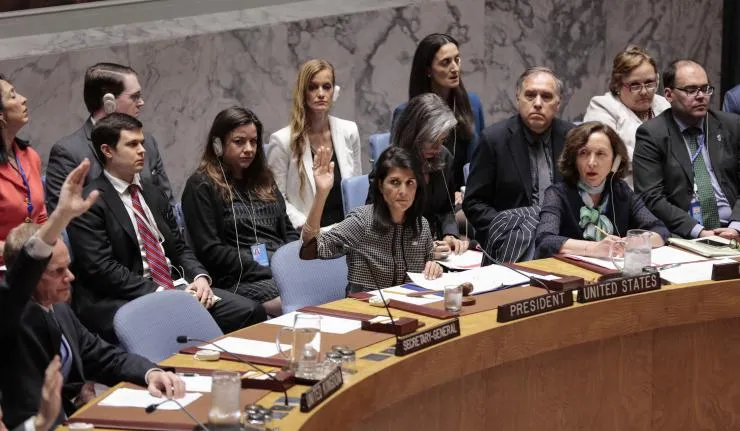
In her last days at the UN, Samantha Power practiced "end times diplomacy" in anticipation of President Trump but Nikki Haley has followed Power's diplomatic playbook.


Cyber issues are rapidly growing in importance to defense alliances. The Journal of International Affairs talked to Ambassador Sorin Ducaru, NATO’s assistant secretary general for emerging security challenges, about NATO’s efforts to improve its cyber defenses against emerging threats.

Concerns about state-directed cyber intrusions have grown increasingly prevalent in recent years. The idea that state principals can obfuscate their involvement in such attacks by delegating operational tasks to non-state agents poses a particularly significant challenge to international enforcement and remedies. Gaps in international law, coupled with obstacles to detection in such cases, may make it more difficult to bring sponsoring states to justice. This paper offers a roadmap for assessing the propensity of states to delegate to non-state actors and correct for false positives in standard…
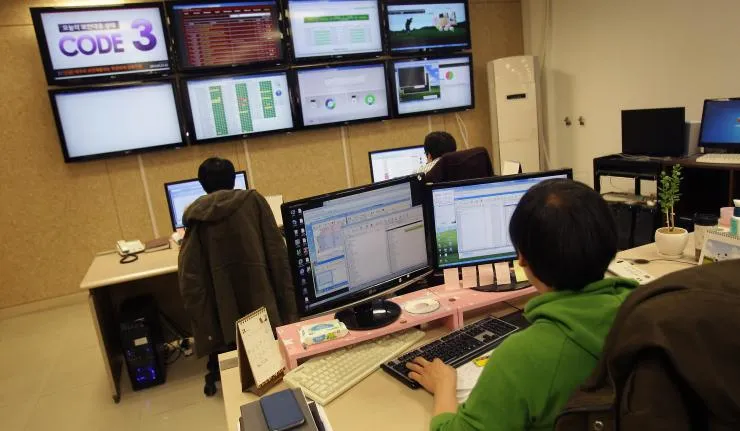
Over the past decade, numerous countries around the world have developed and implemented national cybersecurity strategies. Yet very few of these strategies have been subject to evaluations. As a result, it is difficult to judge the performance of strategies, the programs that comprise them, and the cost-effectiveness of funds spent. Natural and quasi-natural experiments are a promising set of research methods for the evaluation of cybersecurity programs. This paper provides an overview of the methods used for natural or quasi-natural experiments, recounts past studies in other…