
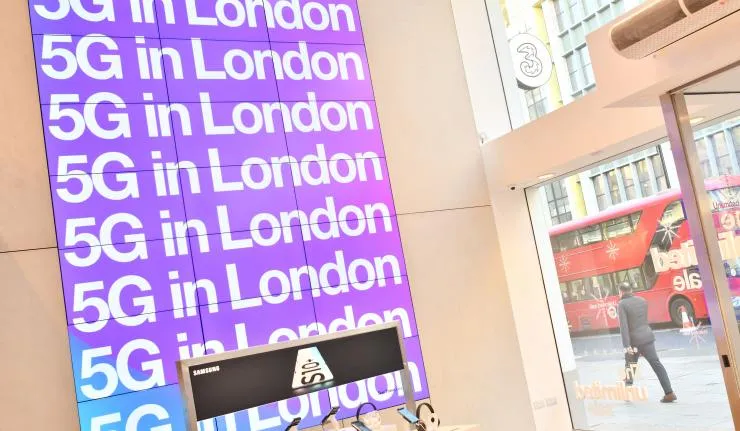
While Huawei provides cost-effective technology favorable to the UK, looming fears of potential Chinese espionage are changing its stance regarding Huawei leading to a total ban from its 5G infrastructure by 2027. However, although providing an international blow to Huawei, the ban remains limited in scope and highlights the underlying pressure from the United States and rebel Tory MPs to take a firm stance.
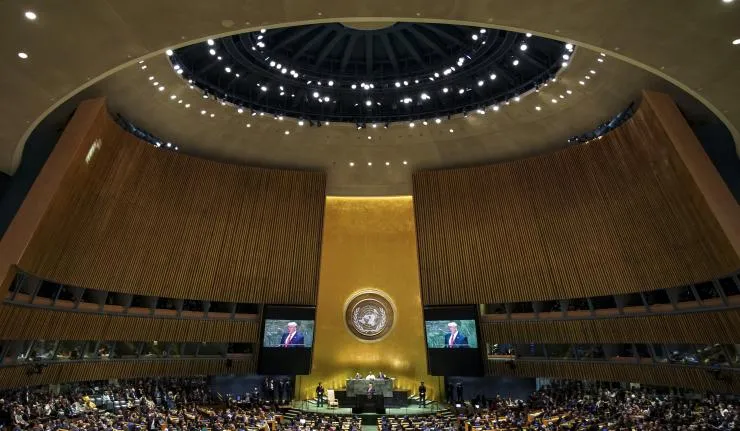
The United Nations Treaty on the Prohibition of Nuclear Weapons (TPNW) will enter into force on January 22, 2021, two days following the inauguration of Joseph Biden as the 46th president of the United States. Despite the TPNW’s widespread support throughout the world, the United States has attempted to thwart the treaty’s progress at every step, boycotting the negotiations from the start and urging other countries to withdraw as the treaty neared its entry into force. These efforts have proven unsuccessful. This article explores the implications of the entry into force of the TPNW, with special…
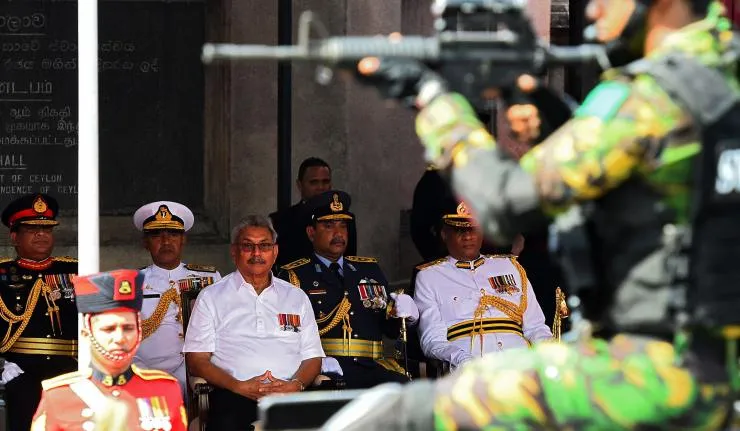
Military land-grabs and military-owned businesses have perverted the development-security nexus in Sri Lanka. The high levels of militarization in the Northern and Eastern Provinces lead to a worrisome downward spiral in which local citizens bear the brunt of the costs. Therefore, maritime securitization in Sri Lanka’s High Security Zones should be balanced against the country’s pressing social and economic development needs.

Spain, among the countries hardest hit by the COVID-19 pandemic, imposed one of the most severe lockdowns in Europe, which was administered by a left-leaning government under Prime Minister Pedro Sánchez. This provided an opportunity for Vox, a far-right populist party, to gain further popularity by promoting anti-lockdown protests. The process by which Vox has gained influence in Spanish politics over the last year shows the vulnerabilities in the Spanish system to anti-democratic and anti-pluralistic forces, and the ways…
Abstract
Protests are a regular feature of life in the Islamic Republic of Iran. Using street power to push for incremental change or voice discontent with government policy, major protests in Iran have been closely identified with the country’s reform movement. But from 2017 to the present, we posit that the aim of protests has drifted from reform towards revolution. We use the observable trend of change in geography, demography, violence levels, organization/ cohesion, and slogans of protests to argue that the 2017 event was a change point: a structural break from reform to revolution. Drawing…

The 2011 global protest cycle, which included the Arab Spring uprising against authoritarian rule, the Chilean Winter protests to end for- profit education, and the Occupy Wall Street movement in the United States to highlight income inequality, marked the most important protest cycle since the movements of the 1960s in Europe and North America. Protest cycles are critical opportunities to effect political and institutional change, yet progress is not guaranteed. The key factors for fostering a positive link between protest…
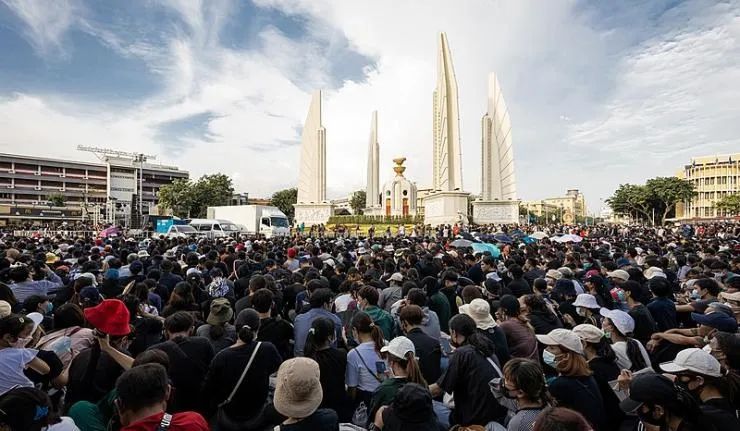
The Thai monarchy, in partnership with the powerful military, has faced an unprecedented challenge from protesters aiming to rein in its unchecked informal authority through specific reforms in adherence with the country’s Constitution. For decades, the two institutions had forged a solid partnership, which has stridently dominated the Thai political landscape, leaving a little room for contest from the opposition. But the monarchy under King Maha Vajiralongkorn faces a new crisis of legitimacy,…
Egypt, the largest state in the Middle East and North Africa region, has long been distinct since the 1970s for its large informal economy, defined in this paper as the economic activities, services, and its related jobs and enterprises that are not regulated or protected by the state. Likewise, it has experienced forms of social unrest, including several instances of large-scale protest, in the ensuing decades. Three protests—in 1977, 2011, and 2019—are analyzed, identifying the reasons surrounding their emergence and how they illustrate the relationship between the informal economy and the…

Olympic years have held a salient place in history, for during the celebration of the Olympic Games, participating city states (in the ancient era i.e. 776 B.C. - 393 A.D.) or member states (in the modern era i.e. 1896 onwards), would agree to observe an Olympic truce. The truce is a commitment to the cessation of hostilities and the deferment of conflict, to allow athletes to travel safely to participate in the Games. In the context of the universal crisis presented by the COVID-19 pandemic, and the postponement of the Tokyo 2020 Summer Olympic Games, it is important to ponder,…

There has been constant conflict in the Okinawa Island of Japan regarding the construction of a new U.S. Military Base. The underlying reason for said conflict has been an environmental concern—the waters surrounding the proposed site for the base are home to the endangered Okinawa dugong, a manatee-like marine mammal. A recent judgement by a U.S. Court of Appeal in response to the conflict, comes arbitrarily, permitting the construction of the base and ignoring the environmental consequences. The authors argue that the judgment does not bode well for it is in violation of several international…
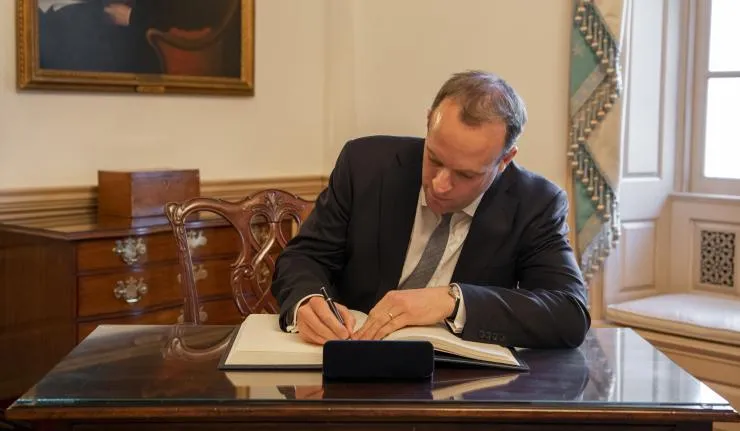
As post-Brexit Britain seeks to redefine its foreign policy, the country has taken a strong stand to condemn human rights’ violations and reject Chinese 5G technology. While a step in the right direction, the UK missed the opportunity to lead a coordinated multilateral response.

Invisibility is no longer a mere trope of fantasy and science fiction; it is a tangible area of research that many companies around the world are pouring vast resources into. This article seeks to trace the evolution of invisibility technology from a literary staple into a real-world innovation. It also seeks to explore its global security implications, particularly in asymmetric warfare and counterterrorism. It examines how the dynamics of warfare might change at a fundamental level once the technology becomes more widespread.