
Conspicuously missing from the cacophony surrounding the debate on the U.S. confrontation with Iran over its nuclear program is any serious consideration of China’s perspective on the issue. Instead of ignoring China, any decision of continuing or escalating the confrontation with Iran should be framed with the following question: Does confrontation with Iran benefit China and undermine the central objective of the U.S. pivot to Asia? The uncomfortable answer is that China would benefit at the expense of the United States.
“One has to say that the Arab Spring is over.” Salman Rushdie[i] In the winter of 2011, a Tunisian spark flamed into the Arab Spring, which has fanned, in one form or another, throughout the Muslim world. The flames have cremated Muammar Qaddafi and Hosni Mubarak, and currently threaten the House of Assad.[ii] Today many former Arab Spring supporters who threw fuel into the Muslim flames are not only disheartened at the violent 11 September film protests, but also feel betrayed; meanwhile, those who feared Muslim democracy would unleash greater evils are currently wagging their told-you-so…
Civil society can be defined as the space between the state and the family generally excluding private sector actors, political parties, and armed groups. Cyclone Nargis, which claimed 130,000 lives in the Delta of Myanmar in May 2008, was, undoubtedly, one of the worse natural disasters in recent history of the country. At the same time, with it came an increase in the number of civil-society actors in Myanmar, following the political opening that came from a mandate to respond and the surge of aid that entered the country. This sudden increase also built on other factors: cease fires in conflict…
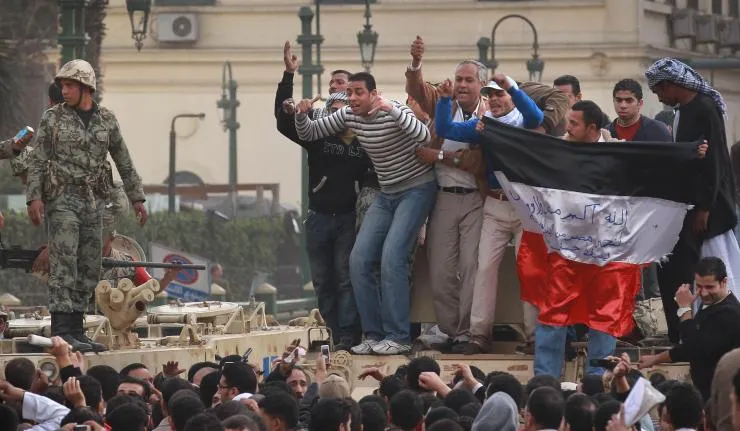
Today, the Arabs are rising against their despotic regimes and leaders in search for liberty and freedom. Yet, the legacy of a similar uprising – the Arab Revolt of 1916 – to expel four-century-old Ottoman rule carries many lessons for the Arab Spring. Over-reliance on foreign help and international third parties to deal with an indigenous cause eventually enabled these outside sources to shape and eventually hijack that indigenous cause. Even though the Arab countries eventually gained their independence they have been struggling with direct or indirect manifestations of colonialism, as well…
This article considers the impact of globalization on American cities and how they will function and rank in a globalized economy. It argues that almost all American cities grew from an original economic raison d’ être, greatly impacted by the industrial era. The end of that era and the arrival of a new economy affect their utility, for better or worse. Secondly, most American cities are place-based, to take advantage of nearby raw materials and to serve trading routes and surrounding communities. Global cities will, by necessity, need to sever these geographical ties and find new places in…
Across much of the globe, the universal right of freedom of thought, conscience, and religion or belief remains under assault. From laws restricting or abrogating this right to violent acts committed by private citizens against religious practitioners, serious violations continue to occur in many regions. In this article, two members of the U.S. Commission on International Religious Freedom, Chairman Leonard A. Leo and Katrina Lantos Swett, focus on current violations of freedom of religion or belief in South Asia, specifically Pakistan, Afghanistan, and India. From the promulgation and enforcement…
One year after the start of the Arab Spring, the Algerian regime appears to have survived wave of revolution. Despite marches held in Algiers and strikes in oil cities throughout 2011, the government has not been endangered or pressured enough to undertake important reforms. The complex political configuration of the regime and the scars of civil war have convinced the society that revolution is impractical. A review of the historical, institutional and social characteristics of Algeria helps us understand why Algerians have not embraced revolution, unlike their neighbors.
Military means are at the center of current counterterrorism efforts. This article argues that the focus on military means is a mistaken one. Military interventions as well as presence in occupied countries rather contribute to an increase in terrorism. On the other hand, economic causes of terrorism remain under-addressed. A more effective counterterrorism policy would include increased financial and economic foreign aid.
A conflict over corruption threatens to bring down the government in Pakistan as the Supreme Court and the executive are in a standoff. Last week the court indicted Prime Minister Yusuf Raza Gilani on contempt charges for failing to revive corruption charges against his boss, President Asif Ali Zardari. The Pakistani military seems only too pleased to see the judiciary undercutting one of its principle political opponents.