
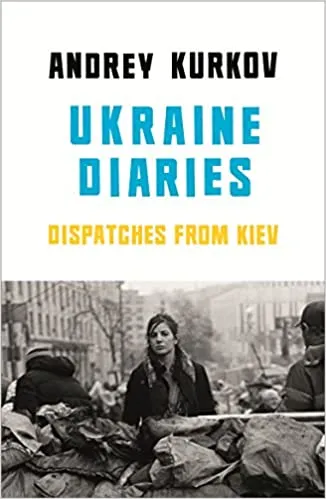
Andrey Kurkov’s diary begins on Thursday, 21 November 2013—the day the Ukrainian government decided to suspend preparations to sign an Association Agreement with the European Union. Many Ukrainians hoped this agreement would draw Ukraine out of Russia’s orbit and reorient it westward. After hearing the news, Kurkov heads to a café where he orders a coffee and then decides to add some cognac to it. He writes, “We have, once again, had our future taken away from us.”1 One of Ukraine’s most well-known fiction writers, Kurkov has kept diaries for decades, but it was not until the EuroMaidan…
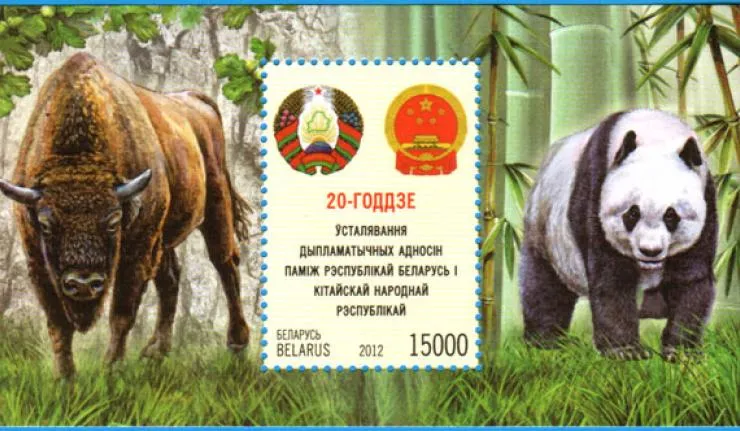
A Chinese construction project in Belarus recently gained quite a bit of media traction. The truth is, however, Chinese investment in Belarus has been growing steadily since 1992. As the trend continues, it has become apparent that EU and U.S. economic sanctions on Belarus fail to instigate the change so desired. Moreover, the sanctions have actually become a point of exploit for Chinese companies such that Belarus is now a market where Chinese firms are not only welcome to assert themselves, but can also enjoy such benefits like a tax-free market entryway into Russia.
“Here is the question—still unanswered—who are the masterminds behind Duca, Legija, and Zveki? Although some politicians have hinted and part of the public is convinced they exist, the official investigation has not clearly indicted anyone. . . . The process of returning Serbia to a normal state and its transformation into a well-governed country appears to be irreversible. But what has the assassination of Zoran Djindjic brought to those who were using political dogmas, prejudices, and ideology as an excuse for this crime?
Milos Vasic[i]
During the summer and fall of 2009, the continuing and often violent Kurdish problem in Turkey seemed on the verge of a solution when the ruling Adalet ve Kalkinma Partisi [Justice and Development Party] or AK Party (AKP) government of Prime Minister Recep Tayyip Erdogan and President Abdullah Gul announced a Kurdish Opening or Initiative (aka as the Democratic Opening/Initiative).[1]; Gul declared, “the biggest problem of Turkey is the Kurdish question” and that “there is an opportunity [to solve it] and it should not be missed.”[2] Erdogan asked, “If Turkey had not spent…
Sergei Ryabkov is the Deputy Minister of Foreign Affairs of the Russian Federation. He has served the Ministry of Foreign Affairs since 1982 in Moscow and abroad. He has been head of the OSCE Unit of the Department of European Cooperation, minister counsellor of the Russian Embassy in the USA, and director of the Department of European Cooperation. Mr. Ryabkov was named Deputy Minister in 2008. As part of his duties, he chairs the Policy Steering Group and Arms Control and International Security Working Group under the U.S.–Russia Bilateral Presidential Commission set up by President’s Obama…