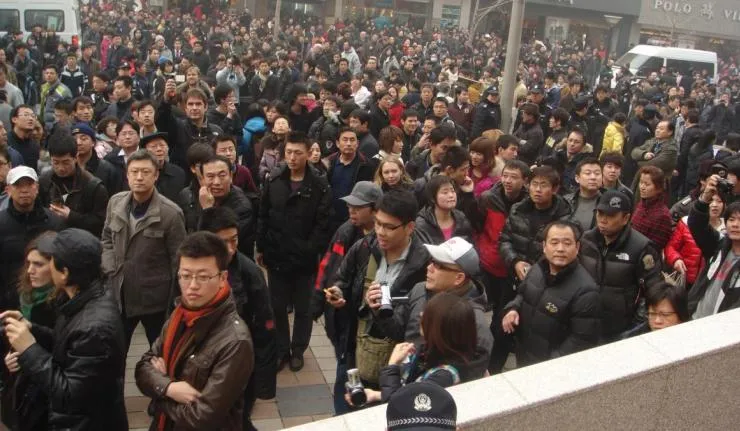
Following the breakdown of autocracies in Tunisia, Egypt, and Libya in early 2011, the international community turned its attention to China, the largest single-party-rule-state in the world. Analysts and commentators have debated the likelihood of a similar round of popular protests and demonstrations in China.[1] At the 48th Munich Conference on Security Policy, U.S. Senator John McCain warned the Arab Spring would spread to China. “I have said on many occasions and I will say again the Arab Spring is coming to China as well,”said McCain.[2] Will the Arab Spring ignite similar…
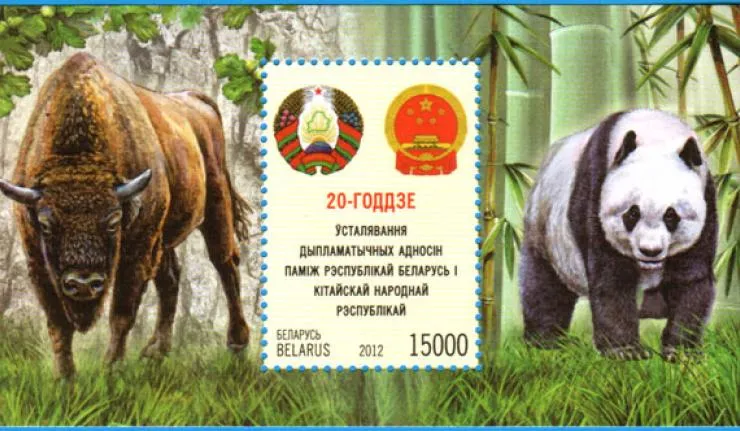
A Chinese construction project in Belarus recently gained quite a bit of media traction. The truth is, however, Chinese investment in Belarus has been growing steadily since 1992. As the trend continues, it has become apparent that EU and U.S. economic sanctions on Belarus fail to instigate the change so desired. Moreover, the sanctions have actually become a point of exploit for Chinese companies such that Belarus is now a market where Chinese firms are not only welcome to assert themselves, but can also enjoy such benefits like a tax-free market entryway into Russia.
The strategic players of China, India, and America (CIA) are all attempting to restore historic supremacy and legitimacy in the Indian Ocean through Sri Lanka—as if the island’s post-Eelam War’s peace dividends could benefit all stakeholders. Sri Lanka, the crown jewel of China’s multibillion dollar New Silk Road—or the String of Pearls—strategy across the Indian Ocean will be home to a $100-million plus, all-encompassing Lotus Tower. The tower, named in deference to the Buddha’s Lotus Sutra, is being paid for by Beijing. Cementing longstanding historical ties as well as reaffirming…
China-India border disputes are one of the most prominent factors embedded in Sino-Indian relations, as they began influencing the relationship between the two Asian powers since the end of the Second World War. The aim of this paper is to identify the historic, geopolitical, and economic reasons behind China-India disputes, showing under which conditions the emergence of a critical juncture helped Beijing and New Delhi governments to partially or completely solve their controversies, as well as what happened when one of the two parts involved in the dispute did not recognize the emergence of a…
Civil society can be defined as the space between the state and the family generally excluding private sector actors, political parties, and armed groups. Cyclone Nargis, which claimed 130,000 lives in the Delta of Myanmar in May 2008, was, undoubtedly, one of the worse natural disasters in recent history of the country. At the same time, with it came an increase in the number of civil-society actors in Myanmar, following the political opening that came from a mandate to respond and the surge of aid that entered the country. This sudden increase also built on other factors: cease fires in conflict…
Across much of the globe, the universal right of freedom of thought, conscience, and religion or belief remains under assault. From laws restricting or abrogating this right to violent acts committed by private citizens against religious practitioners, serious violations continue to occur in many regions. In this article, two members of the U.S. Commission on International Religious Freedom, Chairman Leonard A. Leo and Katrina Lantos Swett, focus on current violations of freedom of religion or belief in South Asia, specifically Pakistan, Afghanistan, and India. From the promulgation and enforcement…