

Every U.S. President in recent decades has had to respond to at least one pandemic disease. Political leadership has proven decisive. In the coming years, U.S. foreign policy will face at least three inter-related issues: today’s major pandemics of AIDS, TB, and Malaria; future outbreaks with the potential to become pandemics; and rising risk from infectious diseases associated with climate change. A review of epidemiologic data shows global progress on each issue is threatened. A coordinated U.S. effort, across agencies and engaged with national and multilateral partners, could save lives and…
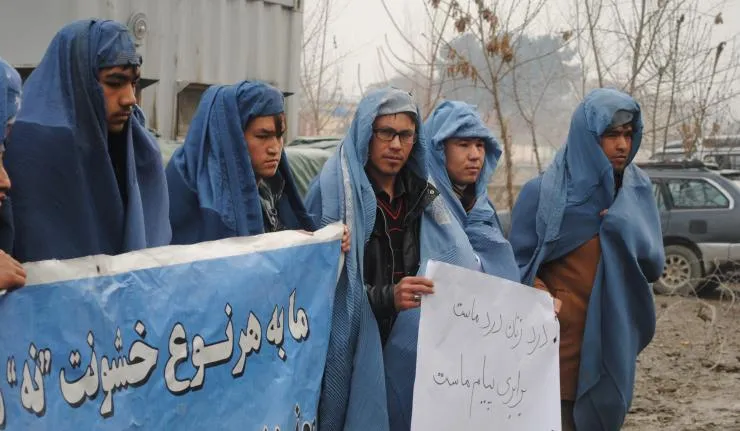
The conflict in Afghanistan, which has spanned 41 years, presents many complex issues with which policymakers must grapple. The human rights situation of Afghan women is prominent among these realities. The overt politicization of Afghan women, their rights, and their role within society can be traced back to 1978 when a coup d’état resulted in the fall of Daud Khan’s government, and commenced the bloody militarization of communist factions and mujahedeen. The subsequent history of Afghanistan’s ongoing war has intensified the exclusion of Afghan women from the social, political, and economic…

This article was originally published in the Journal of International Affair's print edition, Vol. 16, No. 1 in 1962.

This article was originally published in the Journal of International Affair's print edition, Vol. 16, No. 1 in 1962.

Predicting the gender effects of the next phase of technological change is complex. Potential mass job displacement, as predicted by some of the most quoted analysts, could be expected to put gender equality gains at risk, with women again encouraged to focus more on unpaid work, as happened after the two world wars when mass unemployment was threatened. Predictions of job loss by gender are based on extrapolating from the current pattern of gender segregation. This may be a reasonable method to predict job loss, provided attention is paid to the fact that not all women’s jobs are routinized…
Law and politics work in a variety of ways across the Somali territories, and differ significantly. This article negotiates the difference and distance between lawlessness and a failed state, specifically pertaining to Somalia and ultimately discussing the common threads that are shared within these differing arrangements. Factors such as the continued relevance and influence of customary law. Finally, the article examines the realities of nation and state-building arguing that the state under Said Barre was predatory, invasive and strangling for numerous sectors. The article explores arguments…

Social media and the Internet play an important role in the proliferation of hateful and extreme speech. Looking to contemporary networks of digitally mediated extreme right-wing communication, this essay explores the form, dynamics, and potential governance of digital hate culture. It focuses on the cultural practices and imagination present in the networks of digital hate culture to illuminate how two frames, the Red Pill and white genocide, unify the different groups that take part in these networks. After providing a high-level overview of these networks, this essay explains three formal features…

The 28 EU members states have recently agreed to work toward a sanctions mechanism in an attempt to deter future cyberattacks. Stefan Soesanto argues that such a mechanism will be dysfunctional from the get-go and might actually produce counter-productive results.

This article first appeared in the print edition of the Journal of International Affairs, Winter 1992.