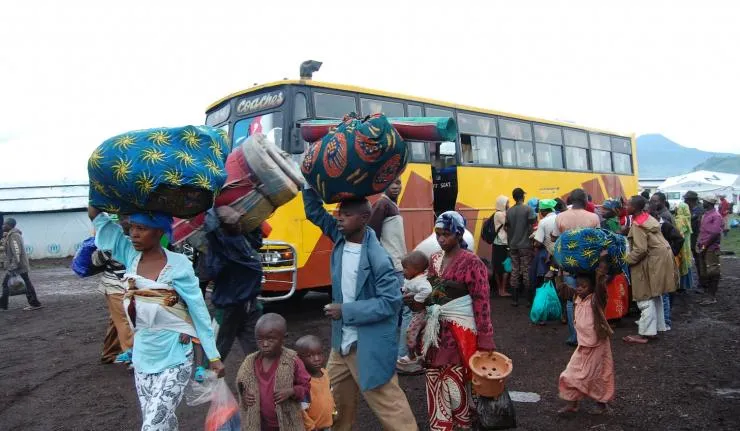
On September 2012, a Congolese doctor stood before the world's leaders at the United Nations General Assembly and denounced the mass rapes of women and girls in the Democratic Republic of Congo (DRC), and the impunity enjoyed by those responsible. Dr. Mukwege said he was ashamed of the international community's failure to stop these atrocities. A month later, he was attacked in his residence in Bakavu, DRC, and was forced into exile. Dr. Mukwege, who was nominated for the Nobel Peace Prize in 2012 and in 2013, returned to the Congo earlier this year in January to resume his work at the Panzi…
Drug trafficking and its impacts have become defining features of politics, governance, and statehood in Guinea-Bissau. While “cocaine politics” is triggering a new era of fragility and instability across the subregion and beyond, the problem is deeply rooted. This paper examines the country’s postcolonial past to better understand the present relationship between drugs and statehood and the role of the international community in Guinea-Bissau. Such an analysis offers insights into potential strategies that might begin the process of delinking these increasingly intractable, interwoven strands…
The issue of the delivery of urban water and sanitation services in African countries is one of the continent’s greatest development challenges. The purpose of this essay, focusing on Addis Ababa, the capital of Ethiopia, is to critically analyze the nature and implications of that city’s recent growth spurt on the ability of local government to meet the basic needs of all its citizens, particularly needs for water and sanitation services. The essay finds that while financing water and sanitation services is a major problem, problems of infrastructure and management are of equal if not more…
The concept of sustainability is catching on in the developed world, but how does it fare in the developing world? What does sustainability look like for emerging economies? Does it make sense for nations struggling to modernize and feed their own people? In countries where development requires resources, how can a philosophy marked by minimalism be justified? This paper analyzes these questions through the lens of Niger, a landlocked country in West Africa. It examines the causes of perpetual impoverishment, including the tragedy of the commons, overpopulation and the culture of dependency borne…
One year after the start of the Arab Spring, the Algerian regime appears to have survived wave of revolution. Despite marches held in Algiers and strikes in oil cities throughout 2011, the government has not been endangered or pressured enough to undertake important reforms. The complex political configuration of the regime and the scars of civil war have convinced the society that revolution is impractical. A review of the historical, institutional and social characteristics of Algeria helps us understand why Algerians have not embraced revolution, unlike their neighbors.