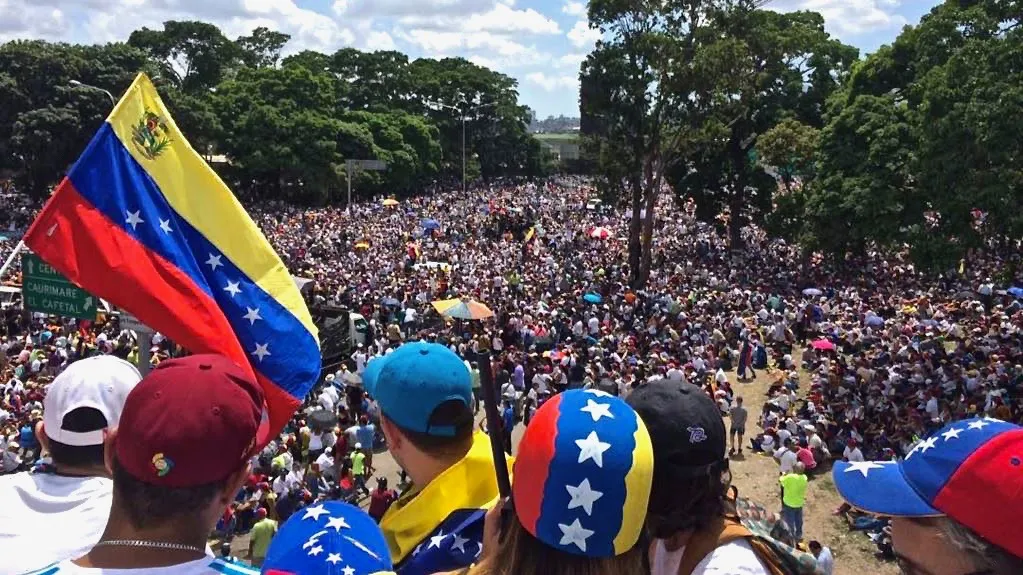
Long before a Tunisian fruit vendor sparked the Arab Spring, student protesters in Paris led a revolt in 1968 that spread to the labor unions and touched off similar protests in London, Berlin, Mexico City, and Rome. The protests took on the pertinent social issues of each city, and it was a turbulent year around the world. Decades later, in the midst of another tumultuous period, university students continue to be a force that sparks and sustains protest culture around the world. The Journal of International Affairs spoke with university students in Ukraine, Turkey, and Venezuela who joined the…
Based on the rational choice theory, this essay develops a theoretical approach to explain how an individual's expected utility of protesting is affected by the probability of having a new government, together with the expected costs, expected benefits, and the probability of retributive consequences for protesting. The essay argues that the probability of having a new government is positively correlated with the opposition's ability to coordinate. By modeling how these variables interact, this essay revises the concept of "threshold", or point where the expected net benefits exceed the expected…
Recent debates on societal transitions to democracy have focused their attention on the notion of "civil society," putting great hope in its democratizing effects. This essay re-examines the notion's utility in the context of the post-2011 Arab Spring uprisings in Tunisia and Egypt. It argues that at least in its conceptualization along the lines of the "transition paradigm," the civil society framework is unable to capture the complex catalysts of the non-teleological, open-ended uprisings in North Africa. Not only does it largely ignore the importance of socioeconomic forces a well as the non-institutionalized,…
As the saying goes, history may not repeat itself, but it certainly rhymes. This adage is the thrust of much of Graham Fuller’s recent book Turkey and the Arab Spring: Leadership in the Middle East. Early in the text, Turkish foreign minister Ahmet Davutoğlu describes his nation’s resurgence as “the return of history,” and the echoes of Ottoman-era preeminence haunt the rest of the book. Fuller, a former CIA official, delivers an accessible, well-researched book that explores the nuances of an increasingly confident Turkey and its modern ambitions within the Middle East. The author…
Henry Kissinger’s World Order poses a timely question: How does the world achieve peace and stability among actors whose definition of “order” varies? Kissinger contends that a successful approach to world order must incorporate both the “multifariousness of the human condition” and the “ingrained human quest for freedom.”
Samuel A. Greene, one of the leading British experts on Russia and post-Soviet space, presents a thoughtful and comprehensive study of the evolution of Russian civil society in Moscow in Movement: Power and Opposition in Putin’s Russia. Greene’s book presents a noteworthy reflection on Russia’s political regime, elite strategies, and social movement organization. It balances theoretical speculations on the nature of the Russian political regime with a new, refreshing perspective on the acute problems of state-society relations, explored through several case studies.
Embedded in its very title, Marc Lynch’s The Arab Uprising: The Unfinished Revolutions of the New Middle East delves into a question that has been left unanswered by commentators and critics alike: Was the Arab uprising one underlying movement organized under a grandiose ideal to give birth to a new Middle East, or was it a multitude of popular and unfinished revolutions that unfolded in different locations in sequential timing? Lynch’s answer is that it was both: The Arab uprising was a continuous oscillation between the transnational and the local. Such a reading is not, in itself,…
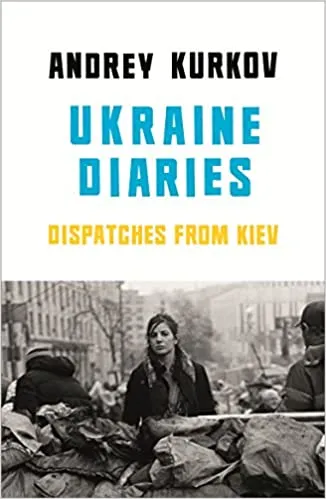
Andrey Kurkov’s diary begins on Thursday, 21 November 2013—the day the Ukrainian government decided to suspend preparations to sign an Association Agreement with the European Union. Many Ukrainians hoped this agreement would draw Ukraine out of Russia’s orbit and reorient it westward. After hearing the news, Kurkov heads to a café where he orders a coffee and then decides to add some cognac to it. He writes, “We have, once again, had our future taken away from us.”1 One of Ukraine’s most well-known fiction writers, Kurkov has kept diaries for decades, but it was not until the EuroMaidan…