“One has to say that the Arab Spring is over.” Salman Rushdie[i] In the winter of 2011, a Tunisian spark flamed into the Arab Spring, which has fanned, in one form or another, throughout the Muslim world. The flames have cremated Muammar Qaddafi and Hosni Mubarak, and currently threaten the House of Assad.[ii] Today many former Arab Spring supporters who threw fuel into the Muslim flames are not only disheartened at the violent 11 September film protests, but also feel betrayed; meanwhile, those who feared Muslim democracy would unleash greater evils are currently wagging their told-you-so…
Ever self-conscious about its purpose and method, the discipline of International Relations (IR) has long debated questions about its most basic relevance, such as what to study and for what purpose. This has led to several complaints about incommensurability between different approaches to the subject, and therefore a lack of progress and knowledge production. Recently, several scholars have advocated a more inclusive debate between different theories and philosophies in IR. This article attempts to evaluate the extent to which scholars, using different theoretical perspectives, can produce meaningful…
During the summer and fall of 2009, the continuing and often violent Kurdish problem in Turkey seemed on the verge of a solution when the ruling Adalet ve Kalkinma Partisi [Justice and Development Party] or AK Party (AKP) government of Prime Minister Recep Tayyip Erdogan and President Abdullah Gul announced a Kurdish Opening or Initiative (aka as the Democratic Opening/Initiative).[1]; Gul declared, “the biggest problem of Turkey is the Kurdish question” and that “there is an opportunity [to solve it] and it should not be missed.”[2] Erdogan asked, “If Turkey had not spent…
Civil society can be defined as the space between the state and the family generally excluding private sector actors, political parties, and armed groups. Cyclone Nargis, which claimed 130,000 lives in the Delta of Myanmar in May 2008, was, undoubtedly, one of the worse natural disasters in recent history of the country. At the same time, with it came an increase in the number of civil-society actors in Myanmar, following the political opening that came from a mandate to respond and the surge of aid that entered the country. This sudden increase also built on other factors: cease fires in conflict…
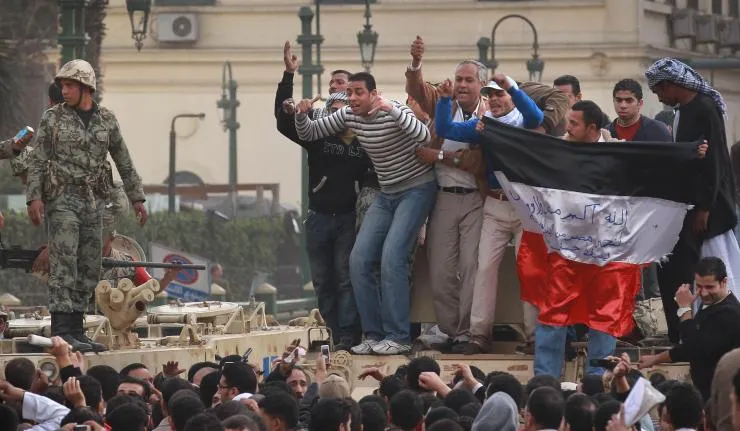
Today, the Arabs are rising against their despotic regimes and leaders in search for liberty and freedom. Yet, the legacy of a similar uprising – the Arab Revolt of 1916 – to expel four-century-old Ottoman rule carries many lessons for the Arab Spring. Over-reliance on foreign help and international third parties to deal with an indigenous cause eventually enabled these outside sources to shape and eventually hijack that indigenous cause. Even though the Arab countries eventually gained their independence they have been struggling with direct or indirect manifestations of colonialism, as well…
This article considers the impact of globalization on American cities and how they will function and rank in a globalized economy. It argues that almost all American cities grew from an original economic raison d’ être, greatly impacted by the industrial era. The end of that era and the arrival of a new economy affect their utility, for better or worse. Secondly, most American cities are place-based, to take advantage of nearby raw materials and to serve trading routes and surrounding communities. Global cities will, by necessity, need to sever these geographical ties and find new places in…
Across much of the globe, the universal right of freedom of thought, conscience, and religion or belief remains under assault. From laws restricting or abrogating this right to violent acts committed by private citizens against religious practitioners, serious violations continue to occur in many regions. In this article, two members of the U.S. Commission on International Religious Freedom, Chairman Leonard A. Leo and Katrina Lantos Swett, focus on current violations of freedom of religion or belief in South Asia, specifically Pakistan, Afghanistan, and India. From the promulgation and enforcement…