
This paper discusses the economic and social development inspired by entrepreneurship in Brazil. In the past thirty years, Brazil has transitioned from an authoritarian military regime to a globalized democracy, growing into the undisputed entrepreneurial capital of Latin America. Economic and social-science studies suggest a correlation between increased entrepreneurial activity and a country’s development. Drawing on academic literature, business articles, and interviews with a range of entrepreneurs in São Paulo, the following article considers the effect of the entrepreneurial phenomenon…
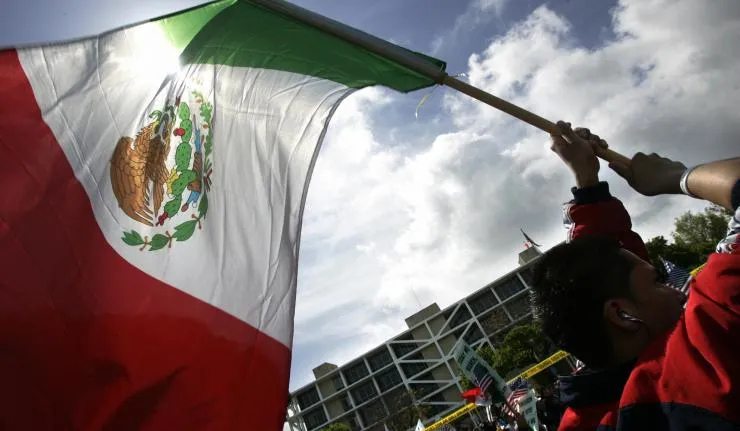
Mexico’s recent economic performance and its swift recovery from the financial crisis are seen by many analysts as near-miraculous. While the Brazilian economic growth has slowed, Mexico has begun to catch up to Latin America’s most-touted state. After experiencing average growth of barely 2% per year from 2000-2010, Mexico’s GDP has increased by 4 percent in the last year. Mexico boasts a skilled workforce, low costs and proximity to the United States. Investment has boomed despite the ongoing drug wars, corruption and a weak rule of law.
The strategic players of China, India, and America (CIA) are all attempting to restore historic supremacy and legitimacy in the Indian Ocean through Sri Lanka—as if the island’s post-Eelam War’s peace dividends could benefit all stakeholders. Sri Lanka, the crown jewel of China’s multibillion dollar New Silk Road—or the String of Pearls—strategy across the Indian Ocean will be home to a $100-million plus, all-encompassing Lotus Tower. The tower, named in deference to the Buddha’s Lotus Sutra, is being paid for by Beijing. Cementing longstanding historical ties as well as reaffirming…
China-India border disputes are one of the most prominent factors embedded in Sino-Indian relations, as they began influencing the relationship between the two Asian powers since the end of the Second World War. The aim of this paper is to identify the historic, geopolitical, and economic reasons behind China-India disputes, showing under which conditions the emergence of a critical juncture helped Beijing and New Delhi governments to partially or completely solve their controversies, as well as what happened when one of the two parts involved in the dispute did not recognize the emergence of a…
Trafficking in persons represents a serious crime, although one that is not yet fully explored. Notwithstanding, what is known about it makes one wonder how this modern-day slavery could acquire such immense proportions. The international community has progressed a long way over the past two decades in understanding and tackling the crime of human trafficking. Throughout the 1990s, it was primarily viewed as, and often confused with, illegal migration. The UN Convention against Transnational Organized Crime with its Protocols adopted in 2000 successfully addressed this distinction and inaugurated…